Listen to this article
Prefer listening? Hear the full article at your pace.
Exercises to lose belly fat should be part of a balanced routine, not a promise to change one body area in a week. Walking and strength work can support fitness and weight management. Abdominal exercises build muscle, but they cannot reliably choose where your body loses fat.
This guide explains six adaptable movements, how to start gradually and what to track beyond your waistline. The aim is a routine you can repeat comfortably, rather than an exhausting challenge or a guaranteed result.
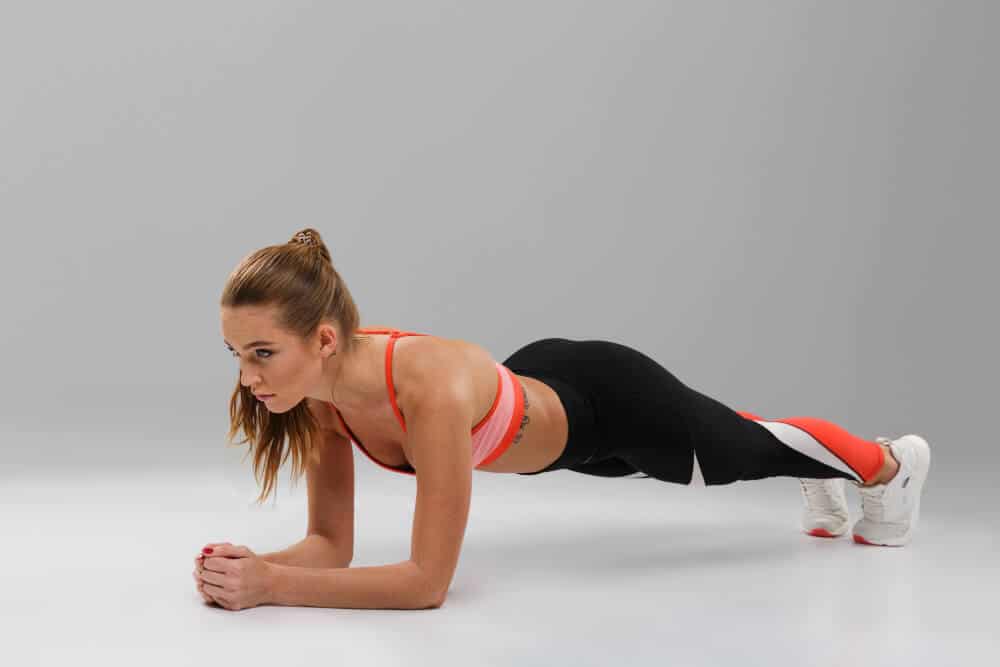
Featured photo: drobotdean / Freepik. The photo shows a full plank; the knee-supported version below is an easier option.
Can exercises target belly fat?
Working your abdominal muscles does not mean fat disappears from the area above them. The American Council on Exercise explains the limits of abdominal training: a stronger core and a change in body fat are different outcomes.
Fat beneath the skin is called subcutaneous fat. Fat deeper inside the abdomen, around organs, is visceral fat. A person’s appearance does not tell the whole story about their health. If you are concerned about your weight or health risks, discuss an assessment rather than relying on a photograph or a one-week measurement.
There is no reliable promise that this routine will remove a set number of centimetres from your waist. For wider context, read our guide to obesity causes and assessment.
Six exercises to lose belly fat: what they can actually do
The following activities offer a mix of movement and strength practice. Choose the versions that suit your ability. You do not need to complete every exercise in one session.
1. Walking
Choose a level route and a comfortable pace. Once you feel ready, brisk walking can provide moderate-intensity activity: you should still be able to talk, although singing becomes difficult. Short walks count, so you can split activity across your day. See the CDC adult activity guidance.
For a practical start, choose a route you know and write down when you will walk. A nearby indoor option can make the plan easier to keep when the weather changes.
2. Supported mini-squat
Stand with your feet about hip-width apart, holding a stable chair back for support. Bend your knees slowly within a comfortable range, keep your back straight and return to standing. Do not force a deep squat.
3. Wall press-up
Face a wall with your hands against it at chest height. Bend your elbows to bring your body closer, then push back slowly. Keep the movement controlled. The NHS strength exercise guide illustrates both wall press-ups and supported mini-squats.
Keep the chair or wall area clear. If a movement feels too difficult, shorten its range or ask a qualified instructor to help you choose an alternative.
4. Modified plank
Rest on your forearms and knees, with your elbows below your shoulders. Keep your head, neck and back aligned, tighten your abdominal muscles and breathe normally. Hold briefly, then relax. Avoid letting your lower back sag.
5. Glute bridge
Lie on your back with your knees bent and feet on the floor. Tighten your abdomen and lift your hips until your shoulders, hips and knees form a line. Lower with control rather than arching your back.
6. Bird dog preparation
Start on your hands and knees, with your hands under your shoulders. Keep your trunk steady while extending one arm, then return and switch sides. Practise one leg at a time before attempting an opposite arm and leg together.
The Mayo Clinic core exercise guide provides illustrated instructions for these three floor movements. Use its demonstrations to check positioning; do not trade comfortable technique for a longer hold or more repetitions.
A first-week starting plan
This is an example for organising practice, not a personalised exercise prescription or a fat-loss deadline. Adapt it to your starting fitness, schedule and any professional advice.
| Stage | Practical goal |
|---|---|
| Choose | Pick a familiar walking route and two comfortable strength movements. |
| Practise | Try a short walk and a few slow repetitions. Stop before technique breaks down. |
| Recover | Allow time between strength sessions and notice how you feel afterwards. |
| Repeat | Repeat an achievable session rather than adding every exercise at once. |
| Review | Record what felt manageable and choose one small adjustment for next week. |
Adults generally work towards at least 150 minutes of moderate aerobic activity weekly and muscle-strengthening work on two days. Strength work should include all major muscle groups; this short selection is not a complete programme. If you are inactive, build up gradually. CDC guidance explains these targets.
Safety and signs to stop
Ask a healthcare professional about suitability if you have an injury, a health condition, recent surgery, are pregnant or have recently given birth. Stop if a movement causes pain or you feel unwell. The NHS exercise safety advice explains when to seek guidance before starting.
Keep breathing throughout strength exercises. If you cannot get comfortably onto and off the floor, choose standing options and ask for help with alternatives. An exercise should fit your circumstances, rather than requiring you to ignore discomfort.
Measure progress beyond your waistline
Use a simple log: the activities you completed, how they felt and what made them easier to repeat. You might notice that the same route feels more comfortable or that your movement is more controlled. These are useful observations even when body measurements do not change.
If weight loss is appropriate, combine activity with sustainable eating habits and support. Our weight loss guide covers meal planning, realistic goals and maintenance. Avoid interpreting a brief change on the scales as proof that one exercise burned belly fat.
Takeaway: choose exercises for fitness, strength and consistency. Begin with manageable movements, practise comfortable technique and build a routine over time. A stronger core is valuable without a one-week transformation promise.
About this information
HealthyCura shares health and wellness information for general reading. This article does not replace professional medical advice, diagnosis or treatment.