Listen to this article
Prefer listening? Hear the full article at your pace.
Foods high in folate include beans, leafy greens and fortified cereals. These are useful places to start when you want more folate in your meals. This guide compares everyday portions, then shows how to use 16 food options without treating any single food as a cure or a complete diet.
Folate or folic acid: which is in your food?
Folate is vitamin B9. Natural food folate and added folic acid are related, but different forms. Folic acid is used in fortified foods and many supplements. NHS: folate and folic acid.
For a fuller explanation, read our folate versus folic acid guide. Here, the focus is choosing and comparing foods.
Compare folate in everyday servings
The following examples come from the NIH Office of Dietary Supplements food table. Amounts are micrograms of dietary folate equivalents (mcg DFE), not milligrams. Preparation and portion size matter; these are reference examples, not identical values for every variety or brand.
| Food and preparation | Serving | Folate (mcg DFE) |
|---|---|---|
| Spinach, boiled | ½ cup | 131 |
| Black-eyed peas, boiled | ½ cup | 105 |
| Asparagus, boiled | 4 spears | 89 |
| Brussels sprouts, frozen and boiled | ½ cup | 78 |
| Romaine lettuce, shredded | 1 cup | 64 |
| Avocado, raw and sliced | ½ cup | 59 |
| Broccoli, frozen and cooked | ½ cup | 52 |
| Kidney beans, canned | ½ cup | 46 |
| Peanuts, dry roasted | 1 ounce | 27 |
| Egg, hard boiled | 1 large | 22 |
A cooked half-cup and a raw cup are different amounts of food. Comparing them does not show that cooking creates folate. Similarly, a value for dried beans cannot be substituted for the same weight of cooked beans.
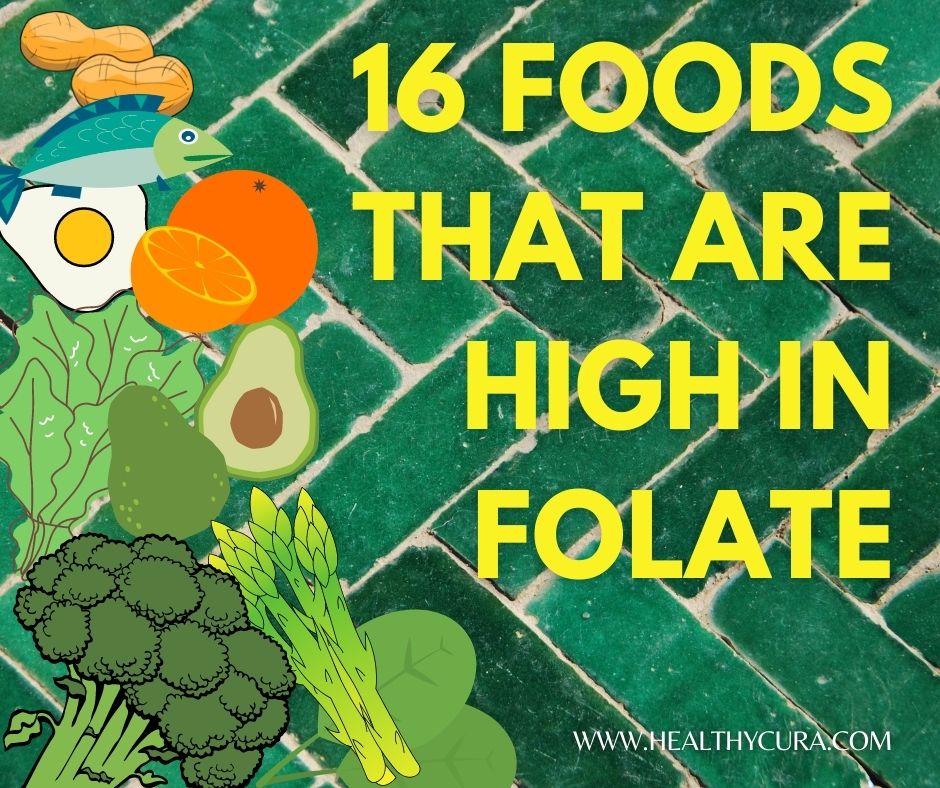
Foods high in folate: 16 options to include
These options vary in folate content. Eggs and some seafood contribute smaller amounts; they should not be described as equivalent to concentrated sources. The NHS food-source list includes greens, peas, chickpeas, kidney beans, liver and fortified cereals.
1. Beans and lentils
Try dal, a chickpea salad or a bean soup. Keep the label or database preparation in mind when comparing portions: dry, boiled and canned beans are not interchangeable.
2. Kale
Add chopped kale to soups, dal or mixed greens. Use a preparation-matched reference if you want to track its folate contribution.
3. Spinach
Stir spinach into dal or serve it as a side dish. Choose a raw or cooked reference value that matches the food on your plate.
4. Asparagus
Serve asparagus alongside a main meal, or chop it into a rice dish. Count the portion rather than assuming every bunch provides the same amount.
5. Brussels sprouts
Roast or steam sprouts and pair them with beans or another main dish. The table above uses frozen, boiled sprouts.
6. Broccoli
Add broccoli to a stir-fry, soup or vegetable tray. A mix of vegetables offers more flexibility than relying on one favourite.
7. Peanuts
Use a small handful or a topping on a salad. Avoid peanuts if you have a peanut allergy; they are an optional ingredient.
8. Sunflower seeds
Sprinkle seeds over a meal for texture. Use the serving information on your packet when tracking nutrients rather than treating a whole cup as a standard snack.
9. Fruit such as papaya and bananas
Choose fruit you enjoy and can obtain regularly. A fruit salad is one option; fruit names alone do not tell you the folate content of the portion.
10. Fortified cereals and grains
Look for added folic acid on the label. Wholegrain does not automatically mean fortified, and fortification differs between products and countries. Compare the amount per serving, not just the wording on the front of the pack.
11. Liver
Liver contains folate, but it is not suitable for everyone. Avoid liver and liver products during pregnancy because their vitamin A content can be harmful. See NHS pregnancy food guidance.
12. Eggs
Serve a cooked egg alongside vegetables or beans if it fits your diet. The table shows its folate contribution per egg.
13. Seafood
Seafood can contribute folate, with amounts depending on the species and preparation. During pregnancy, follow local advice on fish choice, quantity and food safety; see NHS food precautions.
14. Beets
Use cooked beetroot in a salad or alongside a main meal. Keep portions and preparation consistent when looking up its nutrient content.
15. Citrus fruit
An orange is an easy addition to breakfast or a packed lunch. It can complement beans and vegetables rather than replacing them.
16. Avocado
Serve sliced avocado on toast, mix it into a salad or use it as a topping for a bean bowl.
How much folate do adults need?
NIH lists daily recommendations of 400 mcg DFE for adults, 600 mcg DFE during pregnancy and 500 mcg DFE while breastfeeding. These are total-intake reference amounts, not instructions to take the same quantity of a supplement. NIH consumer guidance.
If you could become pregnant, CDC recommends 400 mcg of folic acid daily in addition to a varied diet. Discuss pregnancy supplementation with your clinician; a food list does not replace that advice. CDC folic acid guidance.
Turn the list into meals
Start with one change you can repeat: spinach in dal, beans in a lunch salad, or an orange with breakfast. For combinations, shopping swaps and label checks, use our folate-rich meal ideas and shopping guide.
Sources
About this information
HealthyCura shares health and wellness information for general reading. This article does not replace professional medical advice, diagnosis or treatment.