Listen to this article
Prefer listening? Hear the full article at your pace.
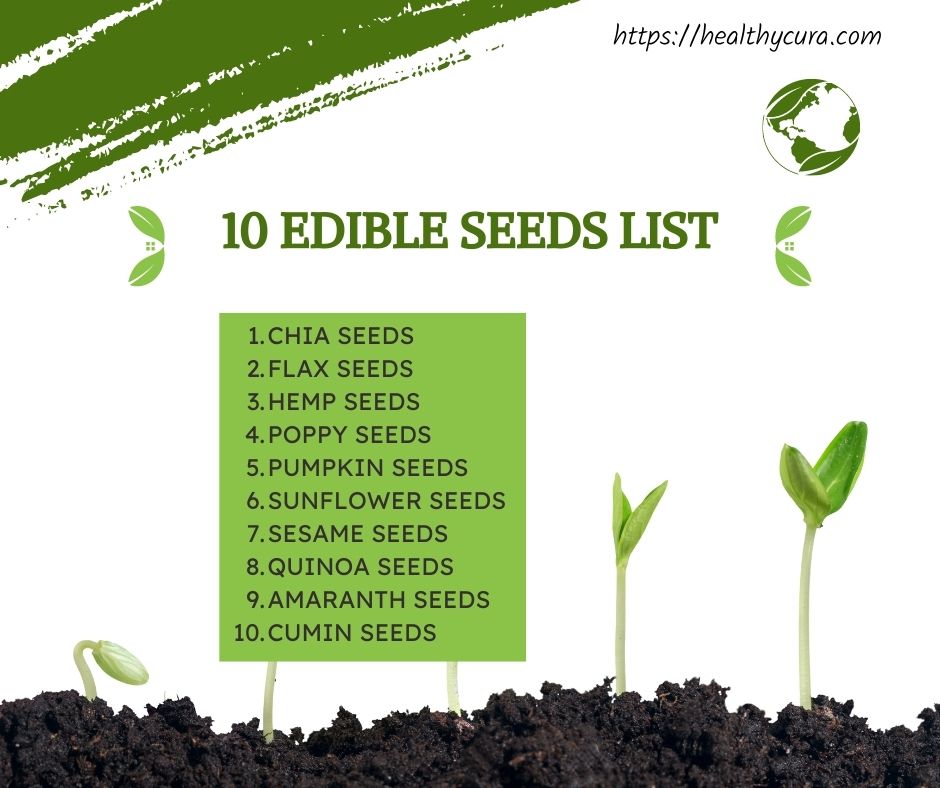
Edible seeds can add crunch, flavour and variety to everyday meals. Chia, flax, hemp, poppy, pumpkin, sunflower and sesame are familiar choices. Quinoa and amaranth work well as cooked staples, while cumin is mainly a spice.
The best choice depends on the dish, your preferences and any allergies. This guide covers ten options, how to prepare them and safety points worth knowing. No single seed treats a disease or guarantees weight loss.
Edible seeds at a glance
Use this comparison to choose a starting point. These are serving ideas, rather than prescribed daily amounts.
| Seed | Common form | Meal idea |
|---|---|---|
| Chia | Fully hydrated in liquid | Chia pudding with fruit |
| Flax | Ground food-grade seed | Stir into porridge |
| Hemp | Hulled hemp hearts | Sprinkle over a salad |
| Poppy | Culinary seeds | Add to bread or a cooked sauce |
| Pumpkin | Hulled kernels or prepared whole seeds | Top soup with kernels |
| Sunflower | Shelled kernels | Mix into a snack portion |
| Sesame | Seeds or tahini | Make a lemon-tahini dressing |
| Quinoa | Cooked seed | Build a vegetable bowl |
| Amaranth | Cooked seed | Make a warm breakfast porridge |
| Cumin | Whole or ground spice | Season lentils or vegetables |
1. Chia seeds
Chia forms a gel when it absorbs liquid. For pudding, follow a recipe that allows the seeds to hydrate fully before eating. Stir well so dry clumps do not remain.
Do not swallow a spoonful of dry chia and then drink water. The American College of Gastroenterology warns about swelling and blockage, especially in people with swallowing problems. Get medical help if food becomes stuck or you cannot swallow saliva.
2. Flax seeds
Ground flax is easier to digest than whole flax, which may pass through the intestine intact. Mayo Clinic recommends the ground form for this reason. Buy food-grade flax and follow the product’s preparation and storage instructions.
Try a small amount in oats, yoghurt or a baked recipe. Flaxseed oil is a different product: it does not supply the fibre found in the seed.
3. Hemp seeds
Hulled hemp seeds, often called hemp hearts, have a soft texture and mild, nutty taste. They are easy to add to a bowl after cooking, or to blend into a dressing.
Choose products sold for food use. The FDA distinguishes hemp seed-derived food ingredients from products with added CBD or THC. A bag of culinary hemp hearts is not the same product as a cannabis supplement.
4. Poppy seeds
Poppy seeds commonly appear in breads, pastries and sauces. Use culinary products from a reputable food supplier and follow your recipe. There is no universal rule that every dish requires hours of soaking.
Do not use poppy seeds to make a home remedy or concentrated tea. The FDA warns that poppy seed tea can expose people to dangerous levels of opiate alkaloids. This is a different use from adding seeds to a conventional food recipe.
5. Pumpkin seeds
Hulled pumpkin seeds, or pepitas, are convenient for salads and soups. Prepared whole pumpkin seeds have a shell and a different eating texture. Check which form your recipe needs before buying.
For a simple meal idea, add a spoonful of kernels to roasted vegetables. Plain or lightly seasoned products let you control how much salt goes into the dish.
6. Sunflower seeds
Sunflower kernels offer crunch in salads, breads and snack mixes. Buy shelled kernels if you want an easy topping; discard the shells when eating in-shell snack products.
Compare labels because salted and sweetened versions differ. There is no reliable universal rule that eating more than 30 grams will damage everyone’s kidneys. People with kidney disease should follow their own clinician’s food plan.
7. Sesame seeds
Sesame adds flavour to stir-fries, breads and dressings. Tahini is a paste made from sesame, and can be mixed with lemon and water for a sauce.
Sesame can cause serious allergic reactions. The FDA lists it as a major food allergen under US labelling rules. Check ingredients, sauces and shared preparation equipment if you have a sesame allergy.
8. Quinoa
Quinoa is botanically a seed but is eaten like a grain. It supplies protein and fibre. Harvard’s quinoa guide explains that some products need rinsing to remove a bitter coating before cooking.
Follow the packet’s water ratio and cook until tender. Serve it with beans and vegetables, or use it as a base for a lunch bowl. If you need a strict gluten-free diet, check the package for cross-contact information too.
9. Amaranth
Amaranth’s tiny seeds also work as a cooked grain-style food. They produce a different texture from quinoa, so the two are not always interchangeable in a recipe.
Try a packet-guided porridge or add cooked amaranth to soup. Oregon State University Extension advises cooking amaranth seeds to make their nutrition accessible.
10. Cumin seeds
Cumin is mainly a seasoning, rather than a large snack serving. Whole seeds and ground cumin bring an earthy flavour to lentils, curries and roasted vegetables.
Start with the amount in your recipe and adjust to taste. A spice can make a meal appealing without needing claims that it burns fat or cures digestive problems.
What nutrition do edible seeds offer?
The nutrient mix varies by seed and preparation. Many supply plant protein, unsaturated fats, fibre and minerals. USDA MyPlate includes nuts and seeds among protein foods and encourages variety across the food group.
Chia and flax provide the plant omega-3 fat ALA. However, ALA is not identical to EPA and DHA. The NIH explains that the body converts only small amounts into those other omega-3 fats.
For broader meal planning, read our guides to vitamins and minerals and foods high in folate.
How to add seeds without overcomplicating meals
- Start with one choice: use ground flax in breakfast or pumpkin kernels at lunch, rather than buying ten bags at once.
- Check the label: compare serving sizes, sodium and added sugar between products.
- Keep portions deliberate: seeds add energy as well as nutrients. More is not automatically better.
- Store as directed: keep containers closed, note the use-by date and discard products that smell rancid or show mould.
- Match texture to the person: seek individual advice for young children or anyone with chewing or swallowing difficulties.
Choose edible seeds for the flavour and variety they bring to food. Prepare them correctly, respect allergies and use them alongside other foods rather than as a treatment or a replacement for a balanced diet.
About this information
HealthyCura shares health and wellness information for general reading. This article does not replace professional medical advice, diagnosis or treatment.