Listen to this article
Prefer listening? Hear the full article at your pace.
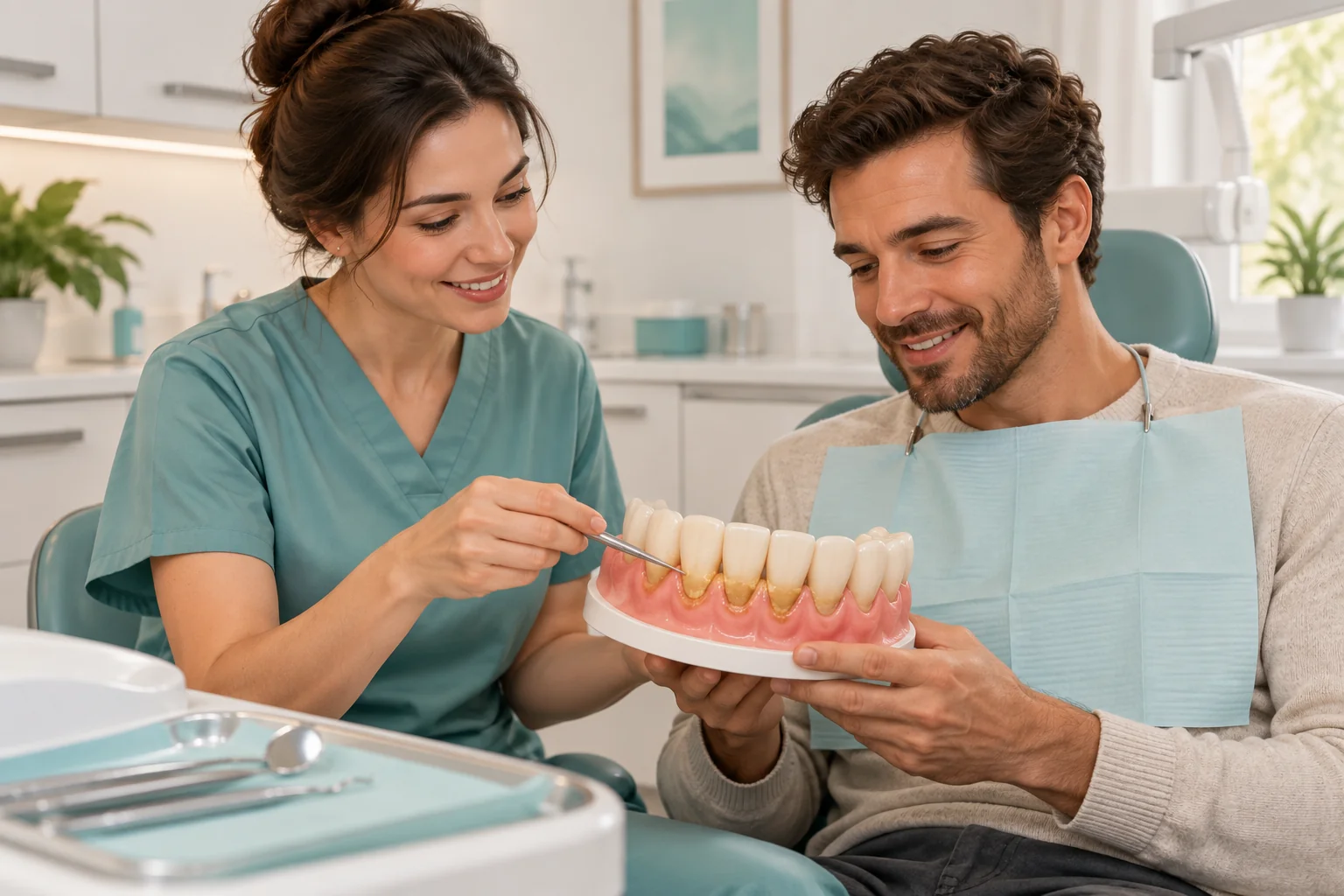
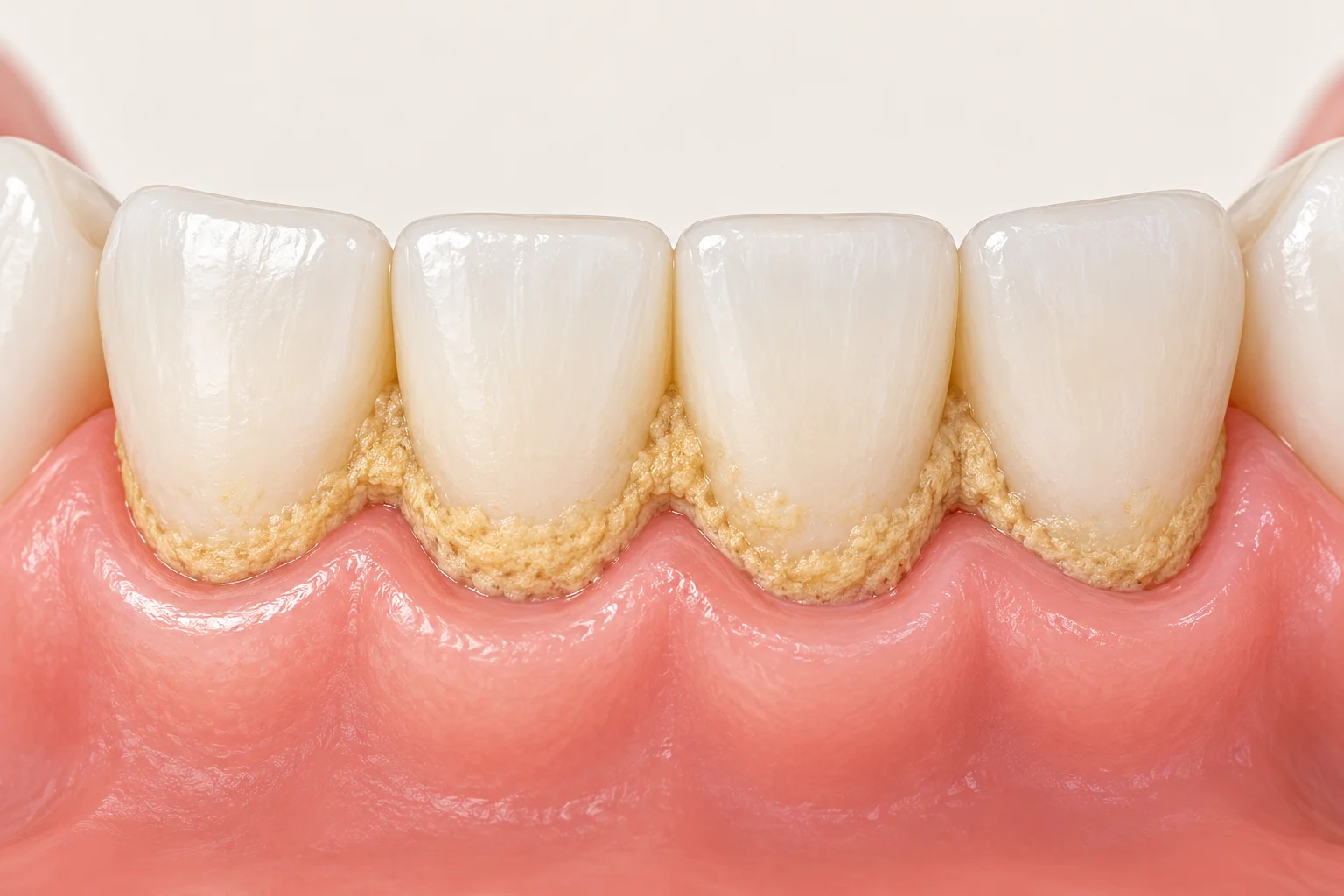
The phrase calculus bridge is commonly used to describe tartar buildup that appears to join neighbouring teeth. Specifically, the clinical material is dental calculus: hardened plaque. However, a photograph cannot establish the condition of the gums beneath it.[1] [3]
Medical information: Arrange a dental assessment for hard deposits or gum symptoms. Do not scrape tartar from your own teeth.
Key takeaways
- Calculus is hardened plaque, also called tartar.[2]
- Brushing and flossing cannot remove deposits once they have hardened.[2]
- Also, visible buildup does not reveal the full extent of gum disease.[1]
- Professional cleaning and ongoing plaque control serve different roles.[6]
- Loose teeth or very swollen gums need prompt advice.[5]
What does a calculus bridge mean?
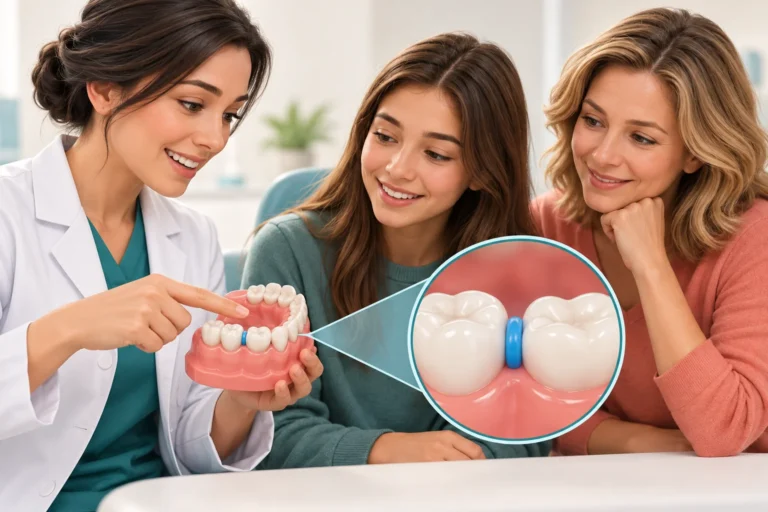
Here, “bridge” describes the connected appearance of the deposits. However, it does not mean a dental restoration placed to replace a missing tooth.
For example, several hard deposits may appear as one continuous crust near the gumline. Nevertheless, the dentist needs to distinguish tartar from other changes and assess the surrounding tissues.
Also, calculus can sit above or below the gumline. For example, it may appear yellow, brown or darker. Therefore, colour alone cannot tell you whether a tooth or gum problem needs treatment.[3]
Plaque versus tartar at a glance
| Feature | Plaque | Calculus or tartar |
|---|---|---|
| What is it? | A soft bacterial film.[2] | Mineralised, hardened plaque.[2] |
| What removes it? | Daily brushing and suitable interdental cleaning.[9] | Professional dental instruments.[4] |
| Can appearance diagnose gum disease? | No. | No; examination is necessary.[1] |
| What is the practical goal? | Disrupt it regularly. | Arrange professional removal and assess gum health. |
Therefore, brushing harder is not the answer to a hardened deposit. Instead, ask for removal and a daily routine that prevents new plaque from building up.
How does buildup develop?
Plaque that remains on teeth can harden. Also, gum disease risk is influenced by factors beyond the visible deposit, including tobacco use and diabetes.[1]
Healthdirect also identifies dry-mouth medicines, family history and certain life stages among relevant gum-disease risk factors.[4]
However, these factors are not a diagnosis. Tell the dental team about your health and medicines so they can tailor the assessment. Do not stop prescribed treatment because of a general article.
Likewise, an overdue visit is a reason to restart care, not a reason to feel ashamed. Ask for a manageable appointment plan if anxiety, cost or access has made regular care difficult.
What signs should you notice?
Hard deposits, unpleasant breath and sore or bleeding gums can prompt an appointment. Also, receding gums and loose teeth deserve attention.[4]
Meanwhile, a lack of pain should not be your only reassurance. The dentist examines the gum tissues and checks the supporting structures rather than judging health only by discomfort.[1]
When should you seek urgent advice?
Ask for urgent dental care if the gums are very sore and swollen or teeth become loose. Also, report mouth ulcers, red patches or a lump rather than assuming they are all due to tartar.[5]
Our mouth ulcer guide explains why a sore area may have a separate cause. A persistent change still needs professional assessment.
How a calculus bridge is assessed and removed
First, the dental professional examines the teeth and gums. They may measure spaces around the teeth with a probe. Appropriate imaging can help assess bone support.[1]
Then the cleaning plan depends on the findings. A visible deposit and established periodontitis do not necessarily require the same treatment.
Scaling and root planing is one non-surgical treatment for periodontitis. It addresses deposits on tooth and root surfaces. Also, the ADA emphasises education and daily plaque control as part of care.[6]
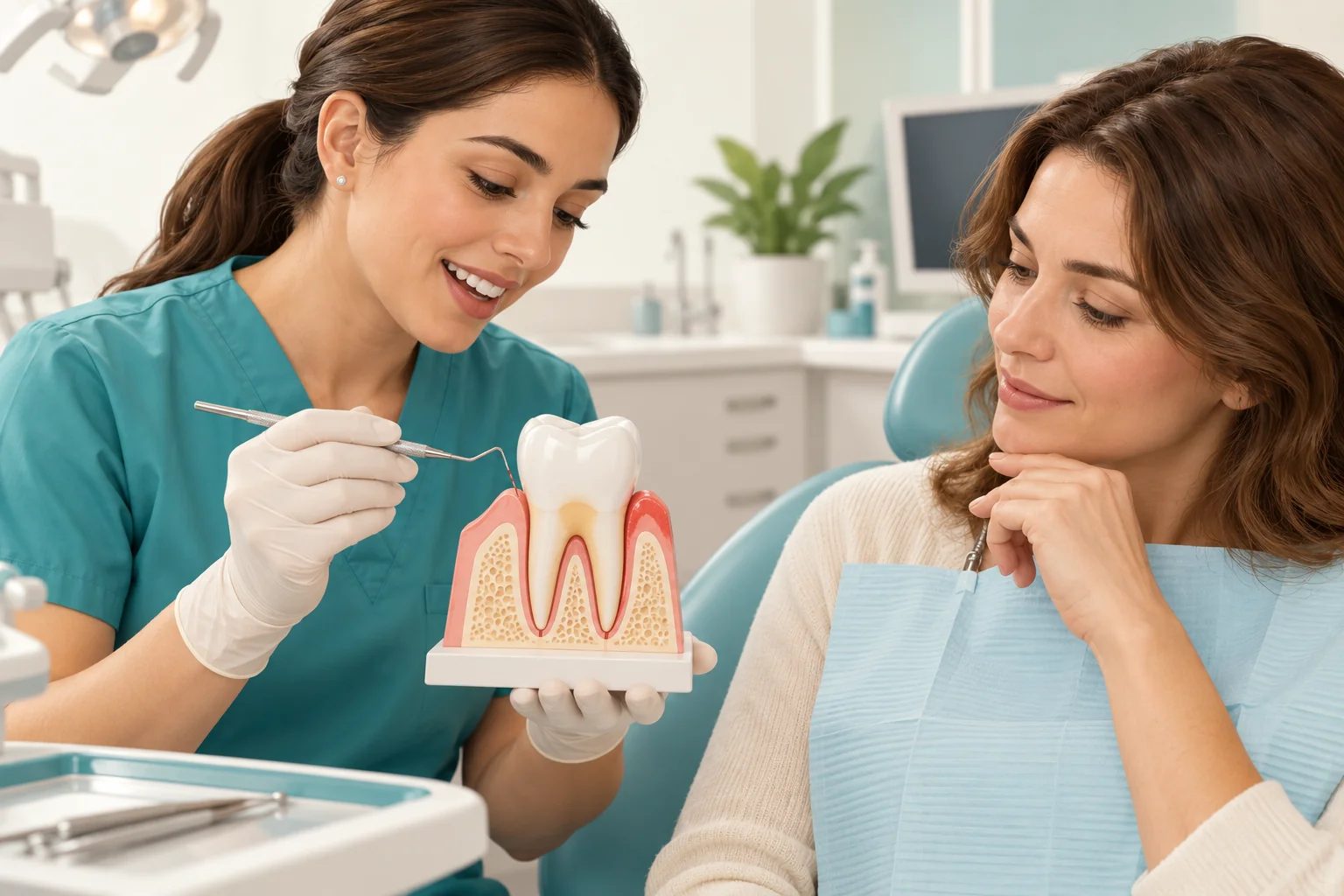
However, some people need further periodontal treatment. Others need a maintenance plan after initial care. Therefore, ask what the assessment showed and which follow-up visits are necessary.[7]
Why not remove it yourself?
Moreover, home scraping can damage teeth or gums. Also, if a piece breaks away, rough remaining deposits may still need professional removal. Contact the practice rather than picking at the area.[3]
Do not substitute an online scraping video for an examination. Instead, ask the team to explain which deposits they found and how they will remove them safely.
Can treatment restore gum health?
Gingivitis can resolve without permanent damage when appropriately treated. In contrast, periodontitis involves lasting damage and requires control rather than a promise of complete reversal.[4]
Therefore, removing visible tartar is not proof that every problem has disappeared. Also, do not judge success only from a smoother-looking tooth surface.
The practical goal is a sustainable environment around the teeth. A periodontal plan combines professional treatment with home care that you can keep doing.[6] [7]
Preventing new buildup after removal
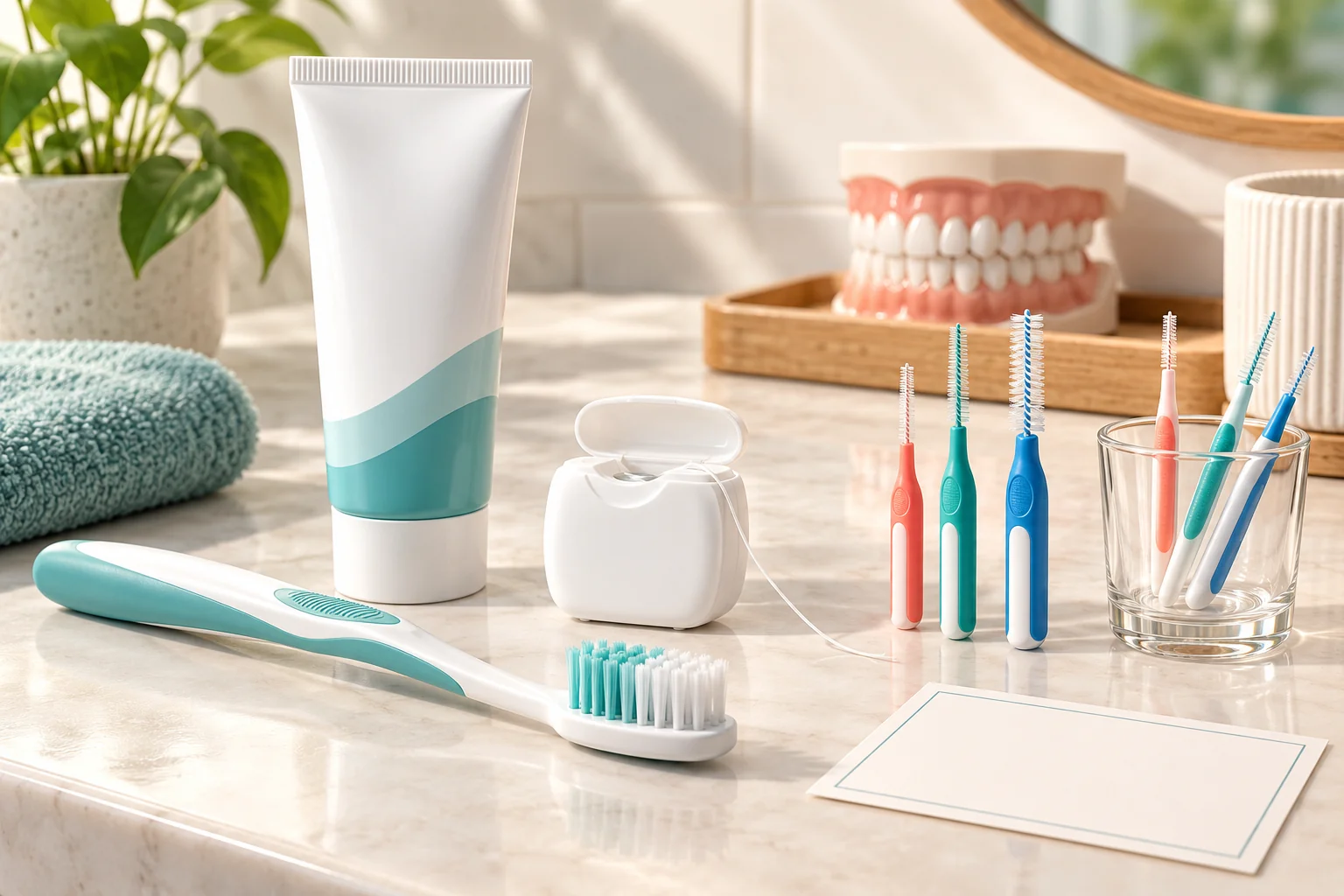
Brush twice daily with fluoride toothpaste and clean between teeth using a suitable aid. Also, keep the review schedule recommended for your mouth.[9]
For example, the team can show you how floss or an interdental brush fits your spaces. NIDCR explains that the purpose is to disturb plaque before it hardens.[2]
A Cochrane review found that floss or interdental brushes added to brushing may reduce plaque or gingivitis. However, the evidence was low to very low certainty and mostly short term. These findings do not show that home tools remove established calculus.[8]
For a practical overview, see our oral hygiene guide. Also, our flossing around braces guide discusses adapting tools around appliances.
For authoritative background, read NIDCR’s gum disease information and Healthdirect’s gum disease guide.
Appointment questions and country context
In the USA, India, Canada, Australia and UK, cleaning fees and referral arrangements vary. Therefore, ask what the estimate includes: assessment, deposit removal, periodontal treatment and follow-up.
- Is this tartar only, gingivitis or periodontitis?
- Which cleaning procedure do I need, and why?
- Will I need more than one visit?
- Which daily tools fit my teeth?
- When will you reassess the gums?
Frequently asked questions
Will a toothpaste dissolve a calculus bridge?
Brushing and flossing do not remove hardened tartar. Instead, arrange professional cleaning and use home care to control new plaque.[2]
Is bleeding always from tartar?
No. Bleeding or sore gums need assessment. Also, other mouth changes may need a separate explanation.[5]
What if a deposit breaks off?
Contact your dentist. Do not try to chip away the remainder yourself.[3]
Do all people need the same cleaning schedule?
No. Follow-up depends on your oral health and treatment needs. Therefore, request an individual plan.[7]
Bottom line
A calculus bridge is a reason to arrange professional care, not a home removal challenge. Find out what is happening around the gums, complete the recommended treatment and build a daily routine you can maintain.
References
- NIDCR — Periodontal (Gum) Disease. Accessed 6 October 2026.
- NIDCR — Ask the Expert: Do I Really Need to Floss?. Accessed 6 October 2026.
- Cleveland Clinic — Tartar. Accessed 6 October 2026.
- Healthdirect Australia — Gum disease. Accessed 6 October 2026.
- NHS — Gum disease. Accessed 6 October 2026.
- American Dental Association — Periodontitis. Accessed 6 October 2026.
- American Academy of Periodontology — Non-Surgical Treatments. Accessed 6 October 2026.
- Worthington HV et al. Home use of interdental cleaning devices, in addition to toothbrushing, for preventing and controlling periodontal diseases and dental caries. Cochrane Database Syst Rev. 2019;4:CD012018. doi:10.1002/14651858.CD012018.pub2. Accessed 6 October 2026.
- Queensland Government — Gum disease. Accessed 6 October 2026.
About this information
HealthyCura shares health and wellness information for general reading. This article does not replace professional medical advice, diagnosis or treatment.