Listen to this article
Prefer listening? Hear the full article at your pace.
Dental debridement means professional removal of plaque and calculus from tooth surfaces above or below the gumline. However, clinics use the term in different contexts. Therefore, ask whether your plan involves preliminary full-mouth cleaning or treatment of the root surfaces.[1] [2] [4]
Medical information: This guide explains care decisions. Your dental team must assess your gum condition and choose the appropriate procedure.
Key takeaways
- Debridement removes deposits; it is not the same as simply polishing teeth.[1] [3]
- US full-mouth debridement can prepare for a later periodontal assessment.[2]
- In contrast, root-surface debridement addresses deposits below the gumline.[4]
- Also, comfort, visit length and follow-up depend on the treatment.[3] [4]
- Daily plaque control remains important after professional care.[6]
What does dental debridement involve?
Specifically, the American Dental Association defines debridement by the removal of plaque and calculus. These deposits can occur on surfaces above or below the gums.[1]
Similarly, Scottish guidance uses the broader term professional mechanical plaque removal for controlling plaque biofilm and calculus during periodontal care. Older terms can overlap, so the name alone may not tell you the exact procedure.[9]
Therefore, ask the team to explain three things: the finding, the purpose of cleaning and the next assessment. A short explanation can prevent confusion about a treatment estimate.
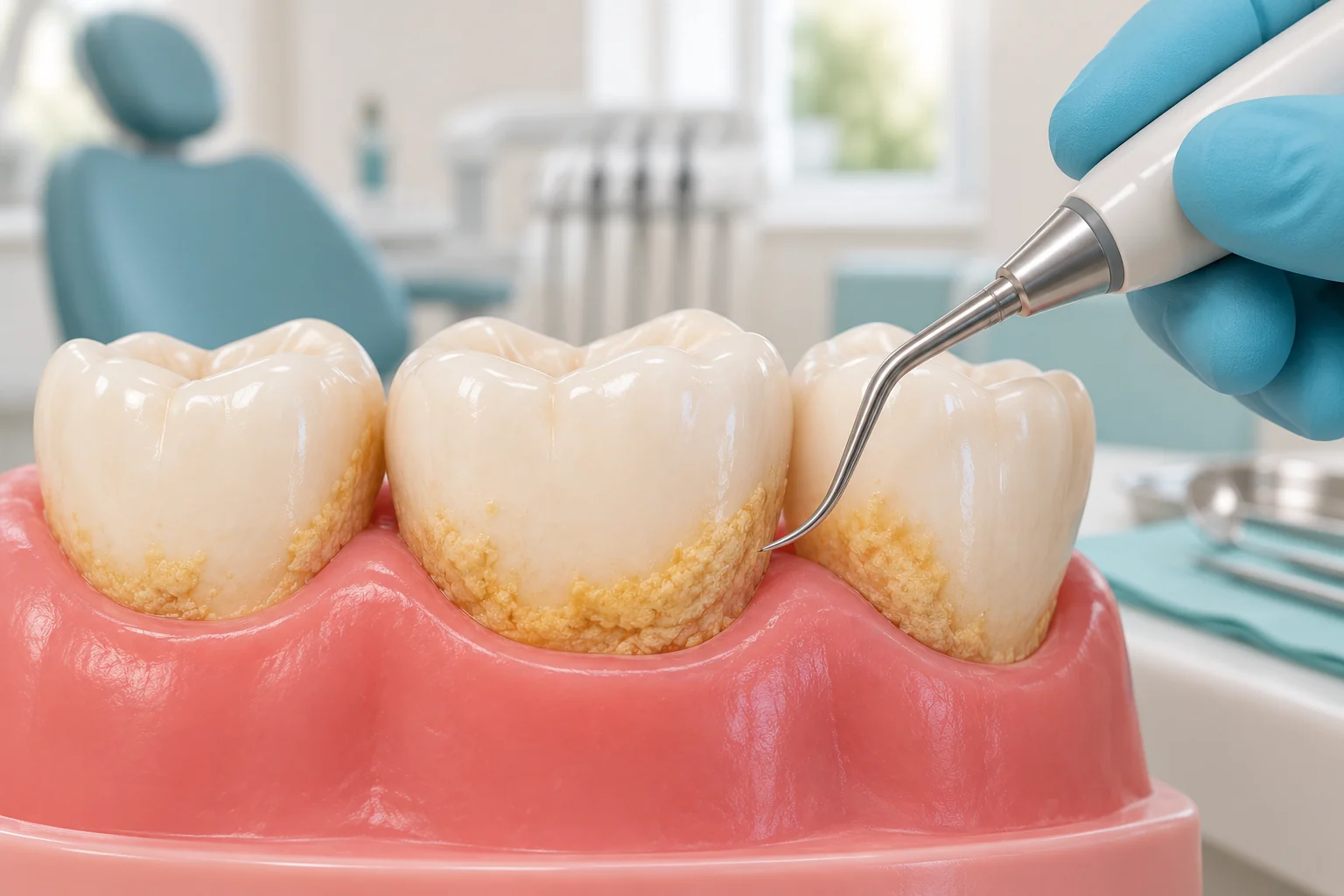
Cleaning procedures compared
| Term | Main purpose | Important distinction |
|---|---|---|
| Routine cleaning | Remove deposits as part of preventive care.[3] | It is not automatically treatment for established periodontitis. |
| Full-mouth debridement, US D4355 | Enable a comprehensive periodontal assessment and diagnosis on a later visit.[2] | Returning for assessment matters. |
| Root-surface debridement | Remove plaque, calculus and debris from roots below the gumline.[4] | It forms part of periodontal treatment. |
| Scaling and root planing | Non-surgical care for periodontitis.[6] [7] | The care plan also includes home plaque control and review. |
Also, a billing term is not a diagnosis. Ask what evidence supports the procedure and how it relates to your own oral health.
Why might full-mouth debridement be recommended?
For example, heavy deposits can make a detailed assessment more difficult. A preliminary cleaning may help the team evaluate the periodontal condition afterward.[2] [3]
Specifically, in US dental coding, D4355 specifically anticipates comprehensive periodontal evaluation on a subsequent visit. However, the ADA notes that some other oral evaluations may occur on the cleaning day when their required components are complete.[2]
Therefore, do not assume that “later periodontal assessment” means the dentist has done no examination at all. Instead, confirm which evaluation has occurred and which one remains planned.
Likewise, do not assume that completing the initial cleaning ends the treatment. The follow-up may identify whether you need additional periodontal care.
What happens at a root-surface cleaning visit?
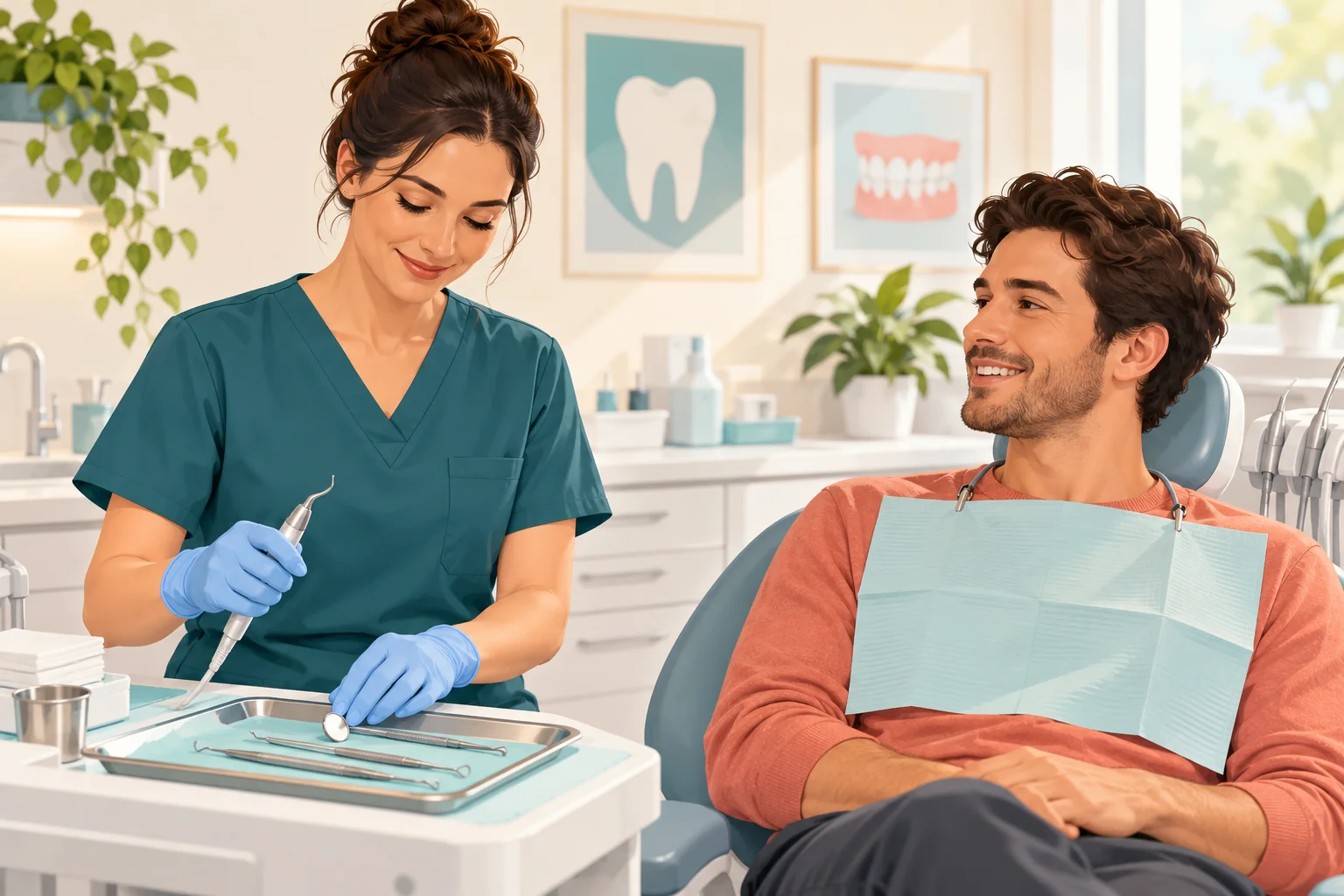
During treatment, the dental professional uses hand or ultrasonic instruments to remove deposits. For root-surface debridement, the treatment reaches below the gumline. Local anaesthesia may be part of the plan.[4]
However, the appointment schedule varies. Leicester’s patient leaflet describes root-surface treatment that may extend over two visits. That example is not a universal duration for every cleaning.[4]
Before the visit, ask how long to allow and whether you will be numb afterward. Also, tell the team if anxiety or previous discomfort might affect your ability to complete the appointment.
Medical history and comfort planning
Bring an up-to-date medicine list and explain any bleeding disorder. Oxford University Hospitals identifies subgingival scaling and root-surface debridement as procedures requiring particular bleeding-risk planning for people with congenital bleeding disorders.[5]
Therefore, let the appropriate clinical teams coordinate your care if necessary. Do not change prescribed medicines or arrange your own preventive treatment from online instructions.
Also, ask how to signal discomfort during the procedure. Discuss the options with the team before cleaning starts rather than assuming you must tolerate pain silently.
Aftercare and possible changes
For example, sensitivity or gum soreness can follow cleaning. However, the expected course depends on the procedure. Ask which symptoms should settle and which ones should prompt a call.[3]
If local anaesthetic leaves the mouth numb, follow advice about eating and hot drinks. In particular, avoid accidentally biting the lip or cheek while sensation is reduced.[4]
After periodontal treatment, reduced swelling may make tooth roots or spaces more noticeable. Discuss these changes with the team rather than interpreting a new appearance on your own.[4]
Meanwhile, severe worsening symptoms require advice. Seek emergency care for breathing or swallowing difficulty associated with oral swelling.[8]
Why follow-up is part of treatment
Periodontal care aims to create conditions you can maintain. Also, a professional must decide whether non-surgical care has achieved the intended result or whether another step is necessary.[6] [7]
Some patients need further treatment, while many need ongoing maintenance. Therefore, ask when the gums will be reassessed and what the team will check at that visit.[7]
However, gingivitis can resolve with appropriate treatment. In contrast, periodontitis requires control of a condition that has caused lasting damage. Cleaning does not promise that lost bone will simply grow back.[10]
Home care after dental debridement
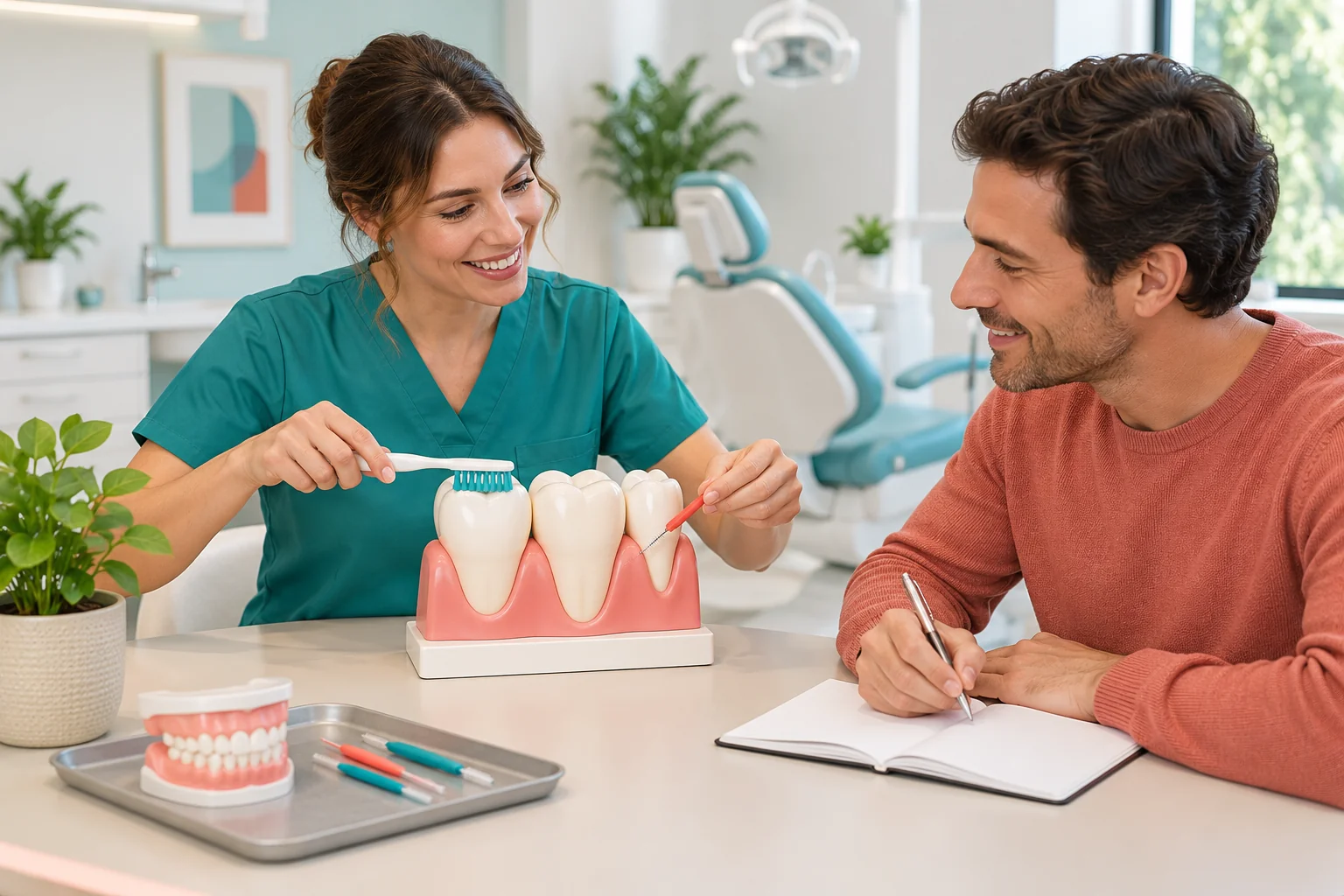
Ask the team to demonstrate the toothbrush and interdental tools that suit your mouth. Daily plaque control is part of periodontal care, alongside professional treatment.[6]
For general habits, read our oral hygiene guide. Also, our flossing and appliance-care guide explains why access may require different tools.
If you have a rubbing or sore area, see our mouth ulcer guide, then tell the dental team about persistent symptoms. Do not treat every mouth change as a cleaning side effect.
For authoritative detail, read the Leicester NHS gum-disease leaflet and the AAP non-surgical treatment guide.
Costs and terminology across countries
D4355 is a US CDT reporting code. It should not be presented as a universal billing rule for India, Canada, Australia or the UK.[2]
Instead, request a written estimate that explains the service in ordinary language. Also, ask whether it includes the later assessment, further cleaning and ongoing maintenance.
Frequently asked questions
Is debridement the same as a deep cleaning?
The terms can overlap in conversation. However, preliminary full-mouth debridement and root-surface periodontal treatment have different purposes. Ask for the exact plan.[2] [4]
Will one visit finish everything?
Not necessarily. A later assessment or further periodontal treatment may be necessary. Therefore, keep the follow-up appointment.[2] [7]
Can I do dental debridement at home?
No. Professional instruments and clinical assessment belong with the dental team. Home care supports daily plaque control.
Do I automatically need antibiotics?
A procedure name alone does not decide that. Ask the treating clinician whether any medicine is necessary and why.
Bottom line
Dental debridement is most useful when its purpose is clear. Know which cleaning you are receiving, plan for comfort and keep the follow-up. Then maintain the home-care routine recommended for your own gum condition.
References
- American Dental Association — Glossary of Dental Terms: debridement. Accessed 6 October 2026.
- American Dental Association — D4355 Guide to Reporting Full Mouth Debridement. Accessed 6 October 2026.
- Cleveland Clinic — Dental Cleaning. Accessed 6 October 2026.
- University Hospitals of Leicester NHS Trust — Gum disease, leaflet 400, version 4, reviewed November 2025. Accessed 6 October 2026.
- Oxford University Hospitals — Dental care for people with bleeding disorders. Accessed 6 October 2026.
- American Dental Association — Periodontitis. Accessed 6 October 2026.
- American Academy of Periodontology — Non-Surgical Treatments. Accessed 6 October 2026.
- NHS — Dental abscess. Accessed 6 October 2026.
- Scottish Dental Clinical Effectiveness Programme — Local measures: professional mechanical plaque removal terminology. Accessed 6 October 2026.
- Healthdirect Australia — Gum disease. Accessed 6 October 2026.
About this information
HealthyCura shares health and wellness information for general reading. This article does not replace professional medical advice, diagnosis or treatment.