Listen to this article
Prefer listening? Hear the full article at your pace.
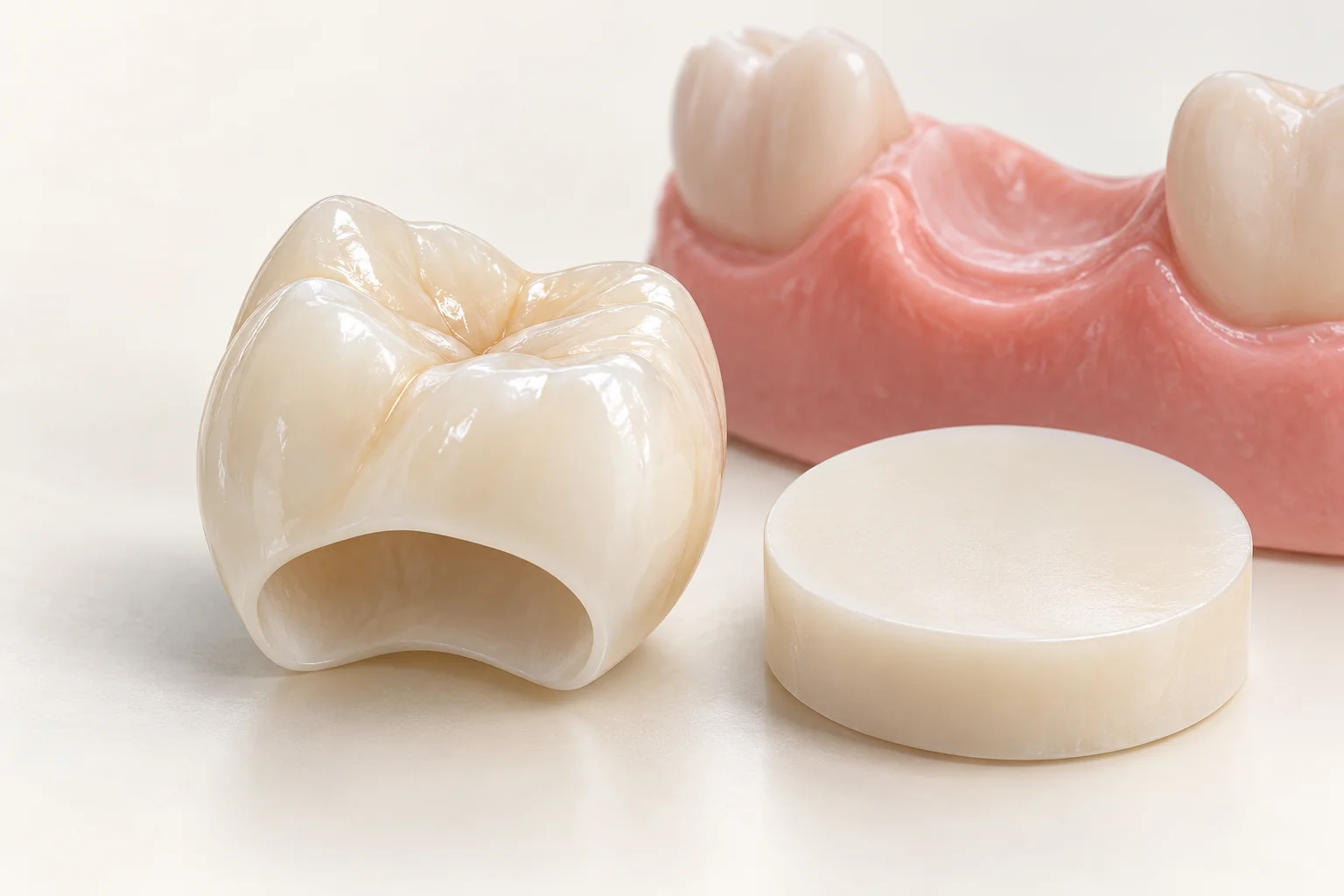
People searching for zirconium for teeth usually mean zirconia crowns. Specifically, zirconia is a zirconium-oxide ceramic used in dental restorations. However, choosing a material comes after deciding whether the tooth actually needs a crown.[1] [3] [5]
Medical information: This guide explains crown choices for adults. A dentist must assess the remaining tooth, gums and bite before recommending treatment.
Key takeaways
- Zirconia belongs to the dental ceramic family.[1]
- Also, crowns cover prepared teeth; they do not automatically replace missing roots.[2]
- Monolithic and veneered designs have different technical features.[6]
- Good survival results do not mean a crown cannot fail.[6] [7]
- The natural tooth underneath can still develop decay.[4]
Zirconium for teeth: understanding the terminology
Specifically, zirconium is the name of a chemical element. In this context, zirconia refers to a ceramic based on its oxide. Therefore, the finished crown is not simply a piece of shiny zirconium metal.
Also, a crown and an implant are different parts of treatment. A crown can cover a natural tooth. If an implant is involved, ask which material makes up the implant, the connecting component and the visible crown.
For example, the crown material alone does not tell you the composition of the entire restoration. Ask for the exact design in the treatment plan.
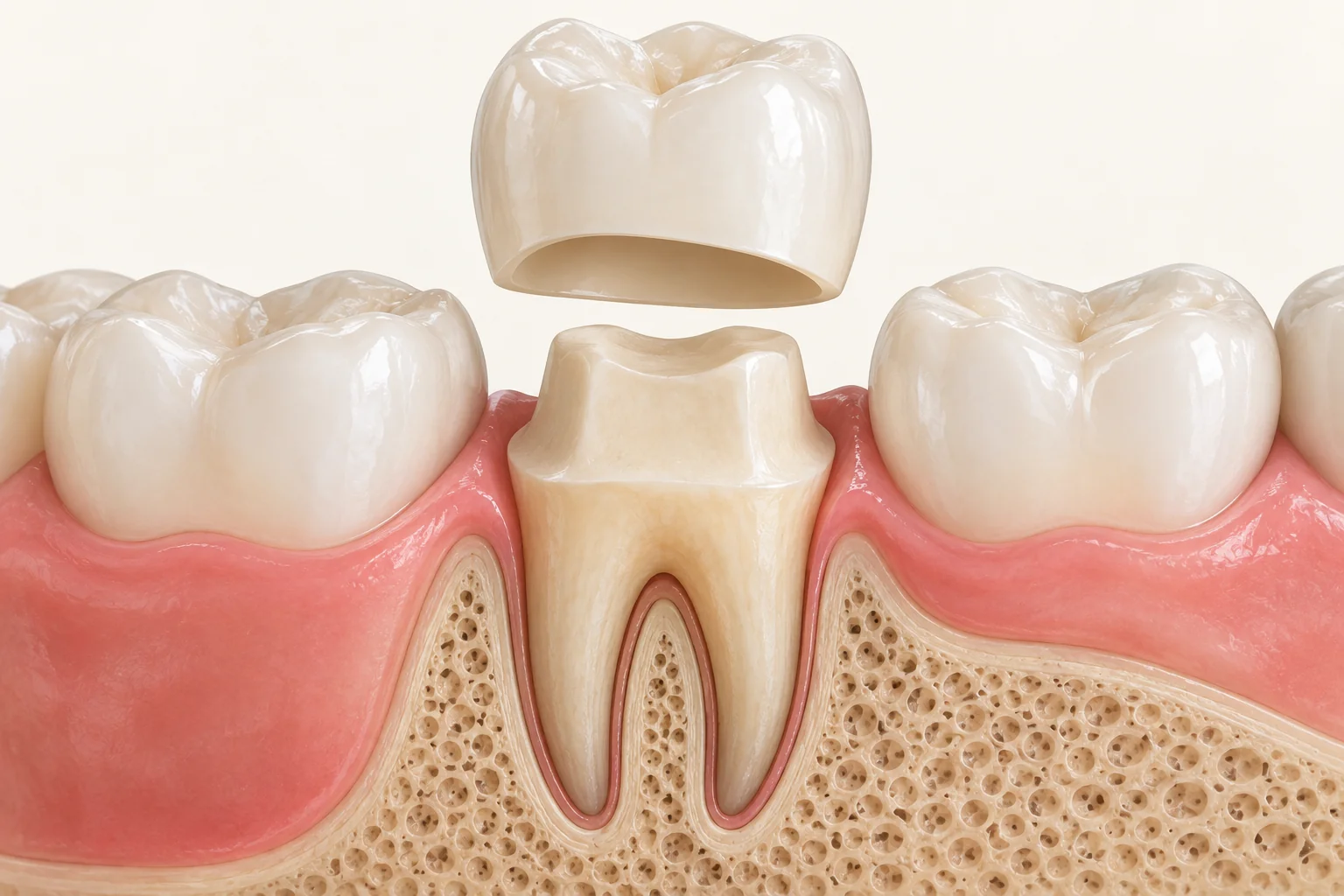
Why might a dentist recommend a crown?
For example, a crown may restore a tooth weakened by a large filling, fracture or previous root canal treatment. However, the amount and condition of remaining tooth structure matter.[2] [5]
Alternatively, a more conservative restoration, such as an onlay, is an option. Therefore, ask why full coverage is preferable in your case before discussing premium materials.[5] [8]
Also, active gum disease, high decay risk or tooth grinding can affect planning. Leeds NHS guidance highlights these factors when assessing crown suitability.[3]
Monolithic versus veneered zirconia crowns
A monolithic zirconia restoration uses zirconia for the main full-contour crown. In contrast, a veneered zirconia restoration adds an outer ceramic layer over a zirconia framework.[1] [6]
| Design | What to understand | Useful question |
|---|---|---|
| Monolithic zirconia | The main crown has a full-contour zirconia design.[1] | How will the shade and translucency match my teeth? |
| Veneered zirconia | An outer ceramic layer adds another technical consideration.[6] | What is the risk of the outer layer chipping? |
| Other ceramic crowns | Different ceramic families offer different properties.[1] | Why is this material appropriate for this tooth? |
| Metal or metal-ceramic crowns | These are established alternatives with their own appearance and preparation trade-offs.[2] [8] | What would change if I chose one of these? |
Importantly, zirconia is not one identical product. Materials research describes efforts to increase translucency while preserving strength and toughness. Therefore, avoid treating every zirconia crown as having the same properties.[1]
How durable are zirconia crowns?
A 2026 systematic review evaluated tooth-supported single crowns. It estimated five-year survival of 96.8% for monolithic densely sintered zirconia and 97.3% for veneered zirconia.[6]
However, these are pooled study estimates, not predictions for your tooth. The review also found fewer ceramic fractures and chips with monolithic zirconia than with veneered alternatives.[6]
A separate 2021 overview reported a range of survival results and complications across different zirconia restorations. Chipping, retention problems and biological complications were among the issues described.[7]
Therefore, “survival” should not be read as “no repairs or problems.” Also, results for tooth-supported single crowns should not be assumed to apply to every implant restoration or multi-unit bridge.
Instead, ask the dentist for an estimate based on your bite, remaining tooth structure and the planned design. However, no material guarantees a lifetime result.
What are the risks and limitations?
Preparing a tooth removes tooth tissue. Also, crown treatment can affect the living pulp, and further treatment may become necessary. Discuss this before consenting.[8]
Other possible problems include loosening, fracture or gum irritation. Also, the crown may need adjustment if the bite or fit is uncomfortable.[4]
A strong ceramic does not make the supporting tooth immune to decay. Therefore, maintenance and follow-up matter just as much as the material label.[4]
If you grind your teeth, explain that history during planning. Also, do not assume that high laboratory strength proves a crown will resist every force in your mouth.[3] [7]
What happens during the crown procedure?
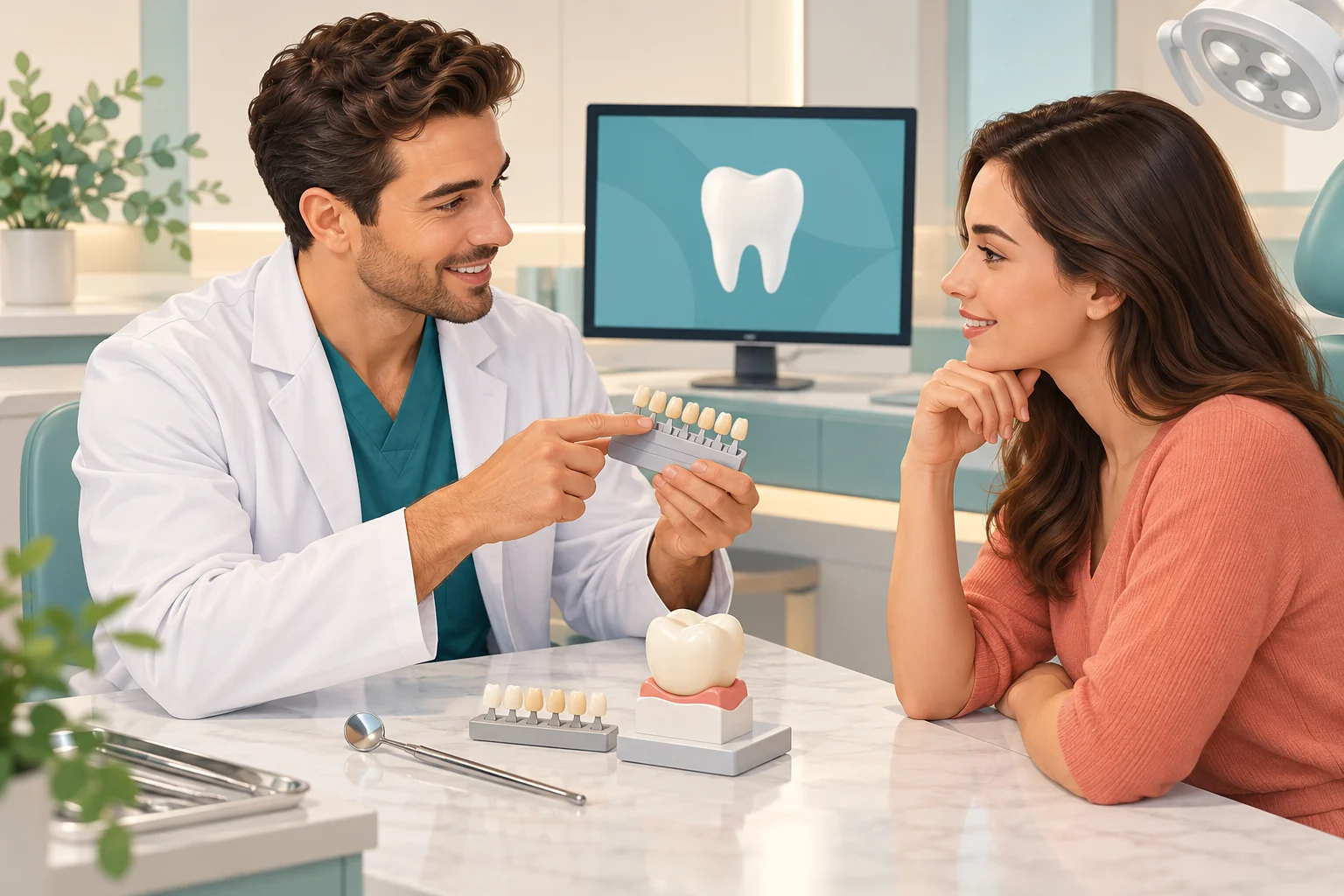
First, the dentist assesses and prepares the tooth. Impressions or a digital record guide the custom restoration. A temporary crown may protect the tooth while the final one is made.[2] [4]
Next, the dentist checks the final crown’s fit, colour and bite before securing it. Some cases need extra treatment stages, so request your own visit schedule.[2]
Also, ask how the team will keep you comfortable. If a temporary crown becomes loose or breaks, contact the practice rather than waiting silently until the fitting visit.[8]
Caring for zirconium for teeth restorations
Once fitted, brush twice daily with fluoride toothpaste and use appropriate interdental cleaning. Also, keep the check-up schedule recommended for your mouth.[3]
Avoid using teeth to open packaging or chewing hard objects such as pens or ice. These habits can damage restorations.[2]
For daily habits, see our oral hygiene guide and guide to interdental cleaning around appliances. Follow the technique demonstrated for your own crown.
If a restoration rubs or a sore spot persists, read our mouth ulcer guide, then arrange assessment. Do not assume that every painful area is caused by the crown.
Cost and questions before treatment
In the USA, India, Canada, Australia and UK, fees and coverage vary. Therefore, ask for a written estimate covering preparation, the crown, temporary work and any planned additional treatment.
- Why does this tooth need full coverage?
- Which zirconia material and design do you recommend?
- What alternatives preserve more tooth tissue?
- What would a repair or replacement involve?
- How will we check the fit and bite afterward?
For patient information, read the Canadian Dental Association crown guide and the University of Bristol crown guide.
Frequently asked questions
Is zirconia always the best crown material?
No. Material choice depends on the tooth and treatment goals. Therefore, compare the proposed design with reasonable alternatives.[3] [5]
Can a zirconia crown get a cavity?
The crown cannot decay, but the natural tooth beneath it can. Daily cleaning remains necessary.[4]
Will it look exactly like a natural tooth?
Appearance depends on material and design. Also, fit and shade need checking before final placement.[1] [2]
Does choosing zirconia mean I need an implant?
No. Zirconia describes a material. A crown over a natural tooth is a different treatment from replacing a missing root.
Bottom line
When considering zirconium for teeth, focus on the diagnosis and exact crown design. Review alternatives, understand the evidence and plan ongoing care. Then choose with your dental team rather than relying on a material’s marketing reputation.
References
- Zhang Y, Lawn BR. Novel Zirconia Materials in Dentistry. J Dent Res. 2018;97(2):140–147. doi:10.1177/0022034517737483. Accessed 6 October 2026.
- Canadian Dental Association — Crowns. Accessed 6 October 2026.
- Leeds Teaching Hospitals NHS Trust — Crowns patient information. Accessed 6 October 2026.
- Healthdirect Australia — Dental crown procedure. Accessed 6 October 2026.
- American College of Prosthodontists — Caps and Crowns. Accessed 6 October 2026.
- Pjetursson BE et al. A Systematic Review and Meta-analysis Evaluating the Survival, Failure, and Complication Rates of Metal-Ceramic, Veneered, and Monolithic All-Ceramic Tooth-Supported Single Crowns—Part 1. Int J Prosthodont. 2026;39(3):308–324. doi:10.11607/ijp.9633. Accessed 6 October 2026.
- Laumbacher H et al. Long-term clinical performance and complications of zirconia-based tooth- and implant-supported fixed prosthodontic restorations: A summary of systematic reviews. J Dent. 2021;111:103723. doi:10.1016/j.jdent.2021.103723. Accessed 6 October 2026.
- University of Bristol Dental School — Dental Crowns. Accessed 6 October 2026.
About this information
HealthyCura shares health and wellness information for general reading. This article does not replace professional medical advice, diagnosis or treatment.