Listen to this article
Prefer listening? Hear the full article at your pace.
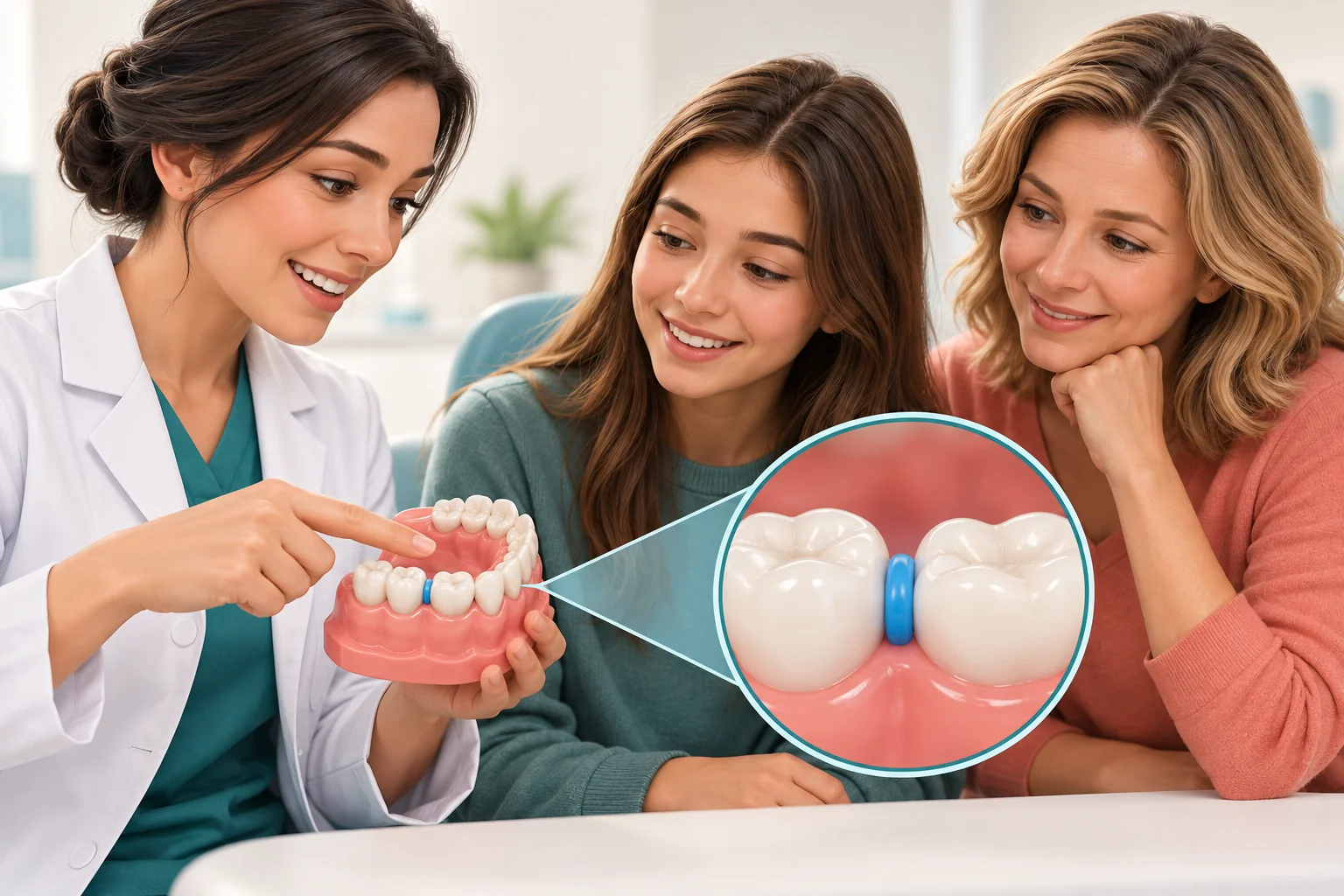
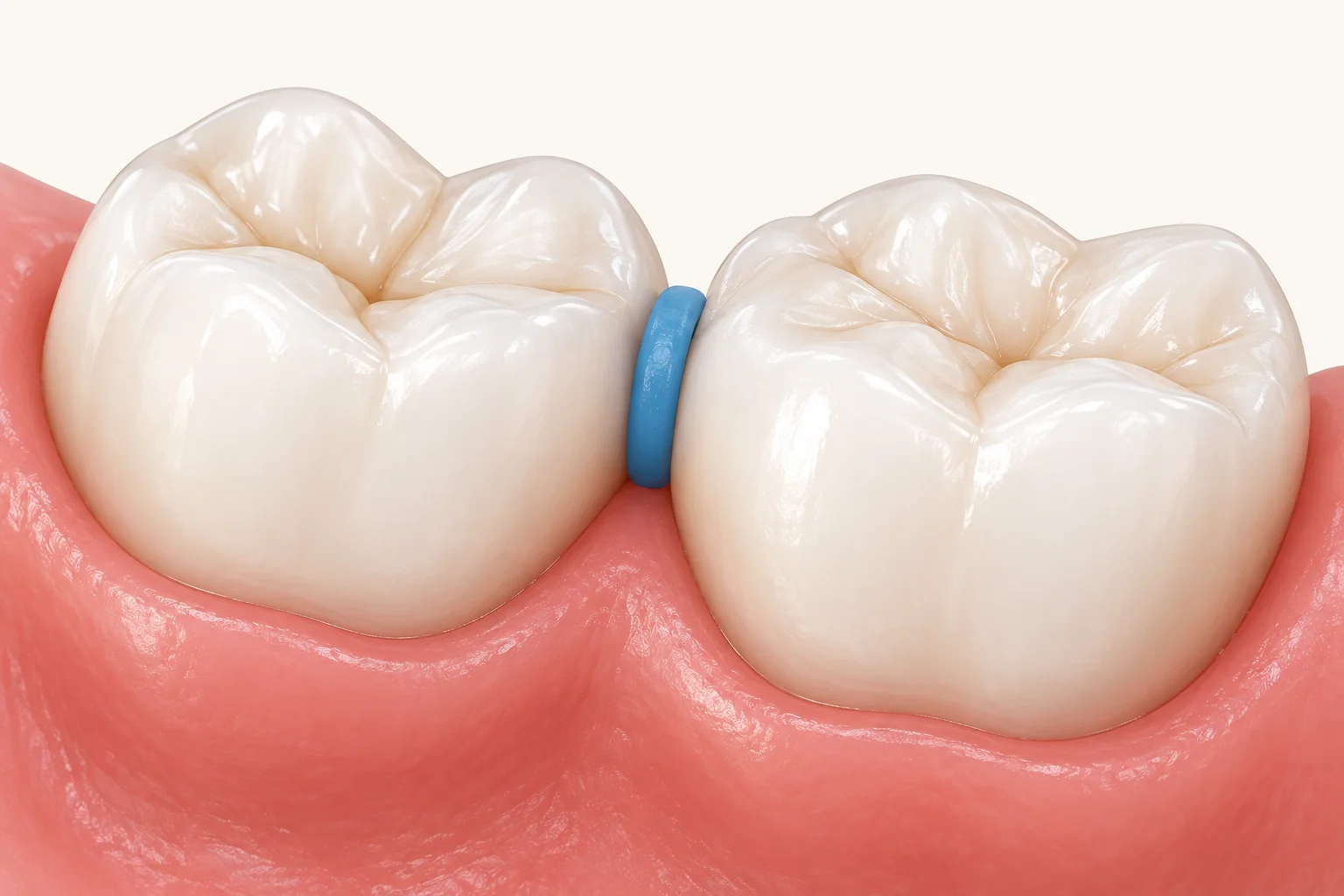
Braces spacers are small separators that an orthodontic professional places between teeth. They create room for bands around selected back teeth. Not everyone needs them. Their use depends on the appliance and your treatment plan.[1] [2]
Medical information: This article explains general care questions. Follow your own orthodontist’s instructions and do not fit or replace separators yourself.
Key takeaways
- Spacers create a small amount of room before orthodontic band placement.[1]
- They are different from elastic bands used to guide tooth movement.[7]
- The team commonly places them shortly before a fitting appointment.[1] [2]
- Contact the practice if a spacer falls out before that appointment.[2]
- Discomfort varies; persistent or worsening problems need advice.[3] [8]
Braces spacers at a glance
| Question | Practical answer |
|---|---|
| What are they? | Small elastic rings or certain wire separators between teeth.[1] |
| Why are they used? | To make room where the treatment plan needs orthodontic bands.[1] |
| How long are they needed? | Often around a week; some guidance describes one to two weeks. Your appointment plan determines the interval.[1] [2] |
| Are they the same as braces elastics? | No. Elastics have a separate prescribed role in moving teeth or adjusting the bite.[7] |
| What if one comes out? | Tell the orthodontic practice. Ask whether you need an earlier appointment.[2] |
Therefore, write down the fitting date and the practice contact details. Do not assume that another person’s schedule applies to you.
Why might an orthodontist use spacers?
Some braces or other appliances need bands around the back teeth. When those teeth contact closely, a separator makes room for the planned band.[1]
However, spacers are only one possible preparatory step. Orthodontic treatment begins with an assessment of your teeth, jaws and bite. The clinician may use X-rays and models or scans when planning care.[3]
For example, ask which teeth need bands and why. This helps you understand the purpose of a small device that might otherwise feel confusing.
Spacers, elastic bands and other devices
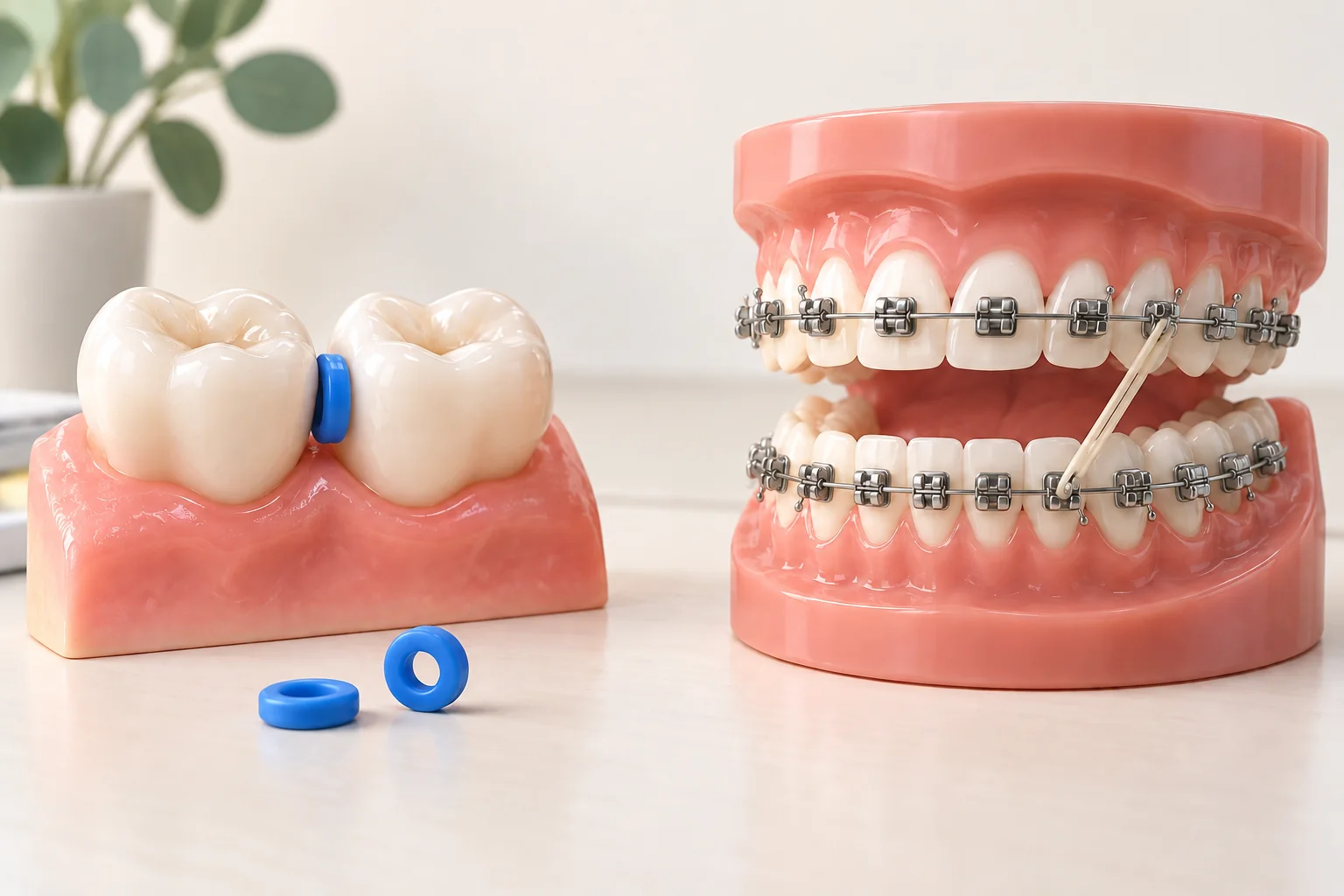
Braces spacers sit between neighbouring teeth. In contrast, orthodontic elastics connect specified points on an appliance to assist tooth movement.[1] [7]
The wear and replacement instructions for prescribed elastics do not apply automatically to spacers. Therefore, avoid mixing instructions from different stages of treatment.
Our guide to rubber bands with braces discusses elastics separately. Keep your orthodontist’s own plan as the reference for both devices.
What happens when braces spacers are fitted?
First, your orthodontic team places the appropriate separators in the planned spaces.[1] Ask them to show you where the devices are and explain the next appointment.
Also, use the visit to ask about allergies, discomfort and cleaning. If you have reacted to rubber or dental materials before, tell the team before fitting.
Do not buy rings online and try to reproduce the procedure. Professional assessment and monitoring matter throughout orthodontic treatment.[3]
Do spacers hurt?
Initially, you may notice pressure or tenderness. However, the experience varies and should not be judged against a fixed pain score.
For example, a small randomised trial involving 30 orthodontic patients recorded pain after separator placement. In both study groups, reported pain rose during the early hours and peaked around 24 hours.[8]
That finding describes a study group, not an exact timetable for you. Also, the trial evaluated a professional laser intervention; it does not justify home laser devices or a universal treatment recommendation.
If pain is not settling, ask the orthodontic team to assess it. In particular, do not dismiss severe pain simply because you were told mild discomfort might occur.[3]
Food, cleaning and daily care
First, request advice specifically for the separator stage. Fixed-brace instructions often recommend avoiding foods that could damage an appliance, including hard or sticky foods.[5]
Also, choose food you can chew comfortably while the teeth feel tender. Ask whether your device needs any additional restrictions.
Continue brushing with fluoride toothpaste. NHS guidance recommends cleaning tooth surfaces thoroughly and using suitable interdental cleaning methods.[6] However, ask the team exactly how to clean near each spacer without pulling on it.
For the wider routine, see our oral hygiene guide and flossing with braces guide. Adapt the routine to the instructions for your current device.
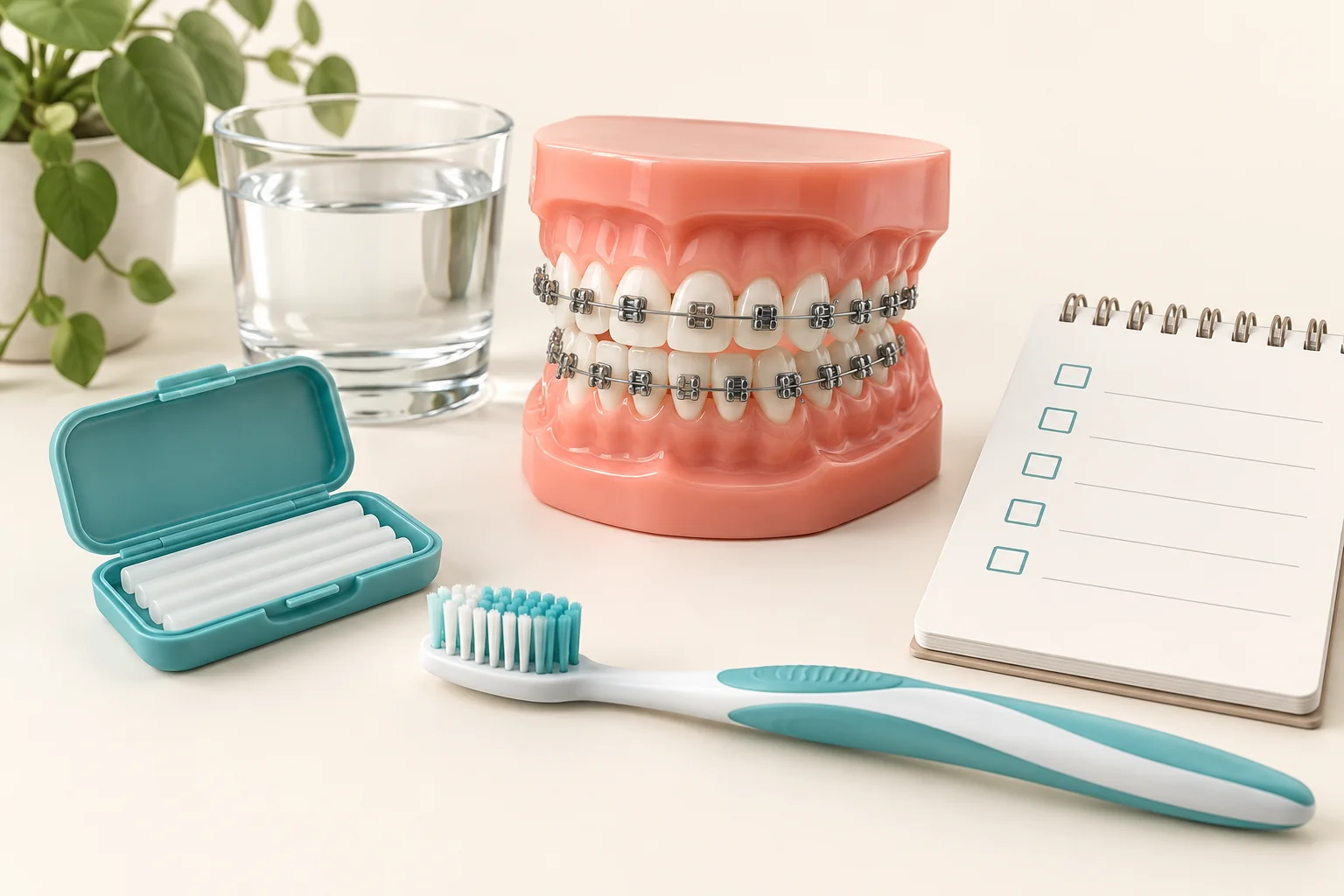
What should you do if a spacer falls out?
Contact your orthodontist before the fitting appointment and explain what happened.[2] Note which side was affected and whether there is pain or bleeding.
However, do not force the spacer back into the gap or use a different elastic. Let the practice decide whether the space needs checking.
Even if you feel well, the practice needs the information to plan the next visit. Ask whether the existing appointment should stay unchanged.
Warning signs and comfort medicines
Call the team for severe or worsening discomfort, injury or a device problem. Ask a pharmacist before using pain medicine, especially for a child or someone with medical conditions.
Breathing or swallowing difficulty needs emergency care. Fever with facial swelling needs urgent dental assessment.[9]
Also, a persistent sore deserves assessment rather than repeated appliance adjustment at home. Our mouth ulcer guide explains when a mouth-lining sore needs care.
Braces spacers and treatment access by country
The device’s purpose is the same across countries, but fees, appointment arrangements and public coverage differ. Readers in the USA, India, Canada, Australia and the UK should request a local treatment plan.
In the UK, the NHS describes orthodontic eligibility separately from a private treatment estimate.[4] Do not assume that a spacer appointment alone establishes entitlement to publicly funded braces.
Australian readers can consult Healthdirect’s orthodontic treatment guide. For terminology, the AAO glossary explains spacers and bands.
Frequently asked questions
Does everyone need braces spacers?
No. Their purpose is to create room where a planned appliance needs bands. Your orthodontist decides whether they are necessary.[1] [2]
Can I remove spacers to eat?
Do not remove them yourself. Instead, ask the practice how to manage eating and discomfort while keeping the treatment plan on track.
Can I use advice for rubber bands instead?
No. Prescribed elastics have their own wear and replacement instructions. A spacer is a different device in a different position.[7]
Will spacers straighten all my teeth?
No. They make room for a later appliance step; they are not a complete orthodontic treatment.[1] [3]
Bottom line
Braces spacers are a short preparatory step for selected treatment plans. Know the next appointment date, follow your cleaning advice and report a lost device. Then let the orthodontic team assess any unexpected problem.
References
- American Association of Orthodontists — Orthodontic glossary (separators and spacers). Accessed 6 October 2026.
- American Association of Orthodontists — FAQs (Will spacers be needed?). Accessed 6 October 2026.
- Healthdirect Australia — Orthodontic treatments. Accessed 6 October 2026.
- NHS — Braces. Accessed 6 October 2026.
- University Hospitals Birmingham NHS Foundation Trust — Instructions for Patients with Fixed Appliances. Accessed 6 October 2026.
- NHS — How to keep your teeth clean. Accessed 6 October 2026.
- University Hospitals Plymouth NHS Trust — Wearing elastics. Accessed 6 October 2026.
- Mirhashemi A et al. Efficacy of Photobiomodulation Therapy for Orthodontic Pain Control Following the Placement of Elastomeric Separators: A Randomized Clinical Trial. J Lasers Med Sci. 2021;12:e8. doi:10.34172/jlms.2021.08. Accessed 6 October 2026.
- NHS — Dental abscess. Accessed 6 October 2026.
About this information
HealthyCura shares health and wellness information for general reading. This article does not replace professional medical advice, diagnosis or treatment.