Listen to this article
Prefer listening? Hear the full article at your pace.
Family health insurance plans in India can help with eligible medical costs, but no single policy is best for every household. The right comparison starts with who needs cover, how the sum insured is allocated, what the policy excludes and what you could still pay yourself.
This guide explains the main arrangements and gives you a worksheet for comparing actual documents. HealthyCura provides educational information; this article does not offer insurance for sale or promise that a particular claim will be paid.
Family health insurance plans: floater or individual cover?
A family floater shares one sum insured between the covered members. Individual cover assigns a separate sum insured to the insured person. A policy covering several people on an individual basis is therefore different from a shared floater. HDFC ERGO’s family policy explanation describes this distinction.
For illustration, imagine a floater with a shared ₹10 lakh sum insured. A ₹6 lakh claim could use a substantial part of that shared amount. This simplified example ignores restoration and other product conditions; it does not recommend a cover amount or predict a real claim.
Ask how the policy handles more than one hospital admission in the same year. A feature described as “restoration” needs its own conditions checked, including when it activates and which claims can use it.
Employer or group cover
A group plan may cover members and selected dependants, according to its terms. Do not assume every relative is included. Employer-linked cover may also change when you leave the organisation. Check the actual member certificate and ask the administrator about continuity options. HDFC ERGO’s individual-cover guidance discusses this limitation of employer cover.
Start with your family’s requirements
Before gathering quotes, write down the people who need cover, their ages, existing cover and the hospitals you would realistically use. Keep medical details private and provide them through the insurer’s authorised proposal process rather than public comment boxes.
Then list the questions that matter to your household. For example: are parents eligible under the proposed arrangement? Is an important planned treatment included? How much could you pay if a claim includes excluded expenses? An explicit question is easier to check than a general promise of “comprehensive cover”.
Disclose existing health problems accurately and respond fully to the proposal questions. IRDAI’s health insurance guidance warns that concealment can cause claim disputes or cancellation. Do not let someone tell you to leave a condition out to obtain a cheaper quote.
Documents to request before choosing
Ask for the current policy wording, Customer Information Sheet (CIS), prospectus and a quote for the exact members and option you are considering. The CIS summarises key features, but it should be read alongside the full terms. IRDAI explains the purpose of the CIS.
Save the document version and product name with each quote. If two sales pages use similar names, confirm that you are comparing the same variant. Mark unanswered questions and request clarification before making a decision.
Compare family health insurance plans using this worksheet
| Area | Question to verify |
|---|---|
| Members | Which relatives are eligible, and are all intended members listed? |
| Sum insured | Is it shared or individual, and what happens after a large claim? |
| Hospitals | Can the hospitals we use arrange cashless treatment for this exact policy? |
| Limits | What room, treatment or benefit limits might leave us paying a balance? |
| Waiting periods | Which conditions or treatments have a waiting period? |
| Exclusions | Which relevant treatments are excluded or require an optional benefit? |
| Cost sharing | What deductible or co-payment applies to an admissible claim? |
| Renewal | What must we do to maintain continuity, and how is renewal pricing explained? |
IRDAI’s buying guidance identifies limits, waiting periods, exclusions and cost sharing as important checks. Do not read a low advertised premium as evidence that these terms are the same across plans.
Understand costs you could pay yourself
A deductible is an amount the insurer does not pay under the applicable terms. A co-payment is a specified share of the admissible claim that the insured pays. A sub-limit caps a particular benefit. These are separate from the premium and from expenses that are excluded entirely.
An official HDFC ERGO Customer Information Sheet illustrates these terms. It is an example document, not a recommendation of that product or a substitute for your own policy.
What may be covered or excluded?
Coverage is product-specific. Do not assume routine dental care, outpatient visits, maternity expenses or every pre-existing condition is covered immediately simply because a policy is called a family plan. Check the relevant clause, waiting period and limit for each benefit you need.
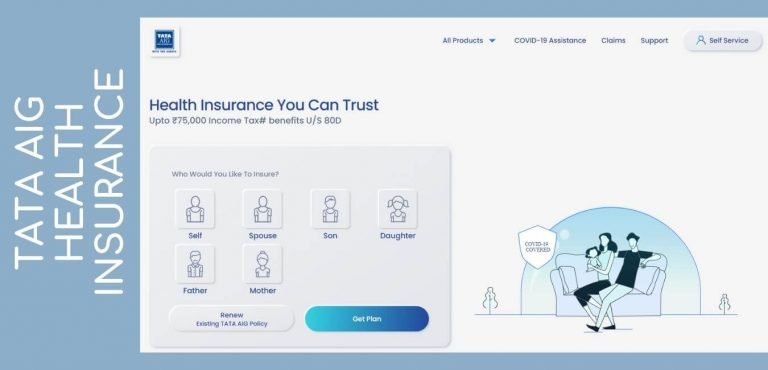
Our TATA AIG document-checking guide shows how to inspect one insurer’s product information. Use the same method when reading other insurers’ documents rather than treating a brand name as proof of suitability.
Cashless and reimbursement claims are different
In an approved cashless arrangement, the insurer settles eligible expenses with the hospital under the applicable process. You may still pay excluded charges or your required share. A policy card alone does not guarantee approval at any hospital.
With reimbursement, you generally pay first and submit the required records for assessment. Payment depends on admissibility and policy conditions. Follow your insurer’s deadlines, forms and submission instructions. HDFC ERGO’s claim guide explains the two routes.
For planned treatment, contact the insurer and hospital early about the process. In an emergency, seek treatment promptly rather than waiting for an insurance answer.
Keep a claim folder
Store the policy, member information, claim reference, bills, receipts, discharge summary and requested medical records securely. Check the insurer’s exact document list; for an example, see HDFC ERGO’s reimbursement process.
Keep copies of what you submit and a dated record of follow-up messages. If a document is requested again, use that record to explain what has already been provided. Do not share policy numbers or medical records publicly to get general advice.
Questions, complaints and final checks
Ask the insurer for a written explanation of unclear clauses or a claim decision. Raise unresolved concerns through its grievance process. IRDAI’s Bima Bharosa portal provides an official route for insurance complaints and warns that it does not ask complainants for payments.
Before choosing, review your worksheet with an authorised insurance professional if you need help. Keep a separate column for unanswered points. A plan is easier to assess when the important conditions are clear, rather than when every uncertainty has been replaced by a sales promise.
Takeaway: compare family health insurance plans using actual documents, member eligibility, limits and your potential share of costs. Keep records and seek written clarification; no plan name or generic ranking can guarantee every medical expense will be paid.
About this information
HealthyCura shares health and wellness information for general reading. This article does not replace professional medical advice, diagnosis or treatment.