
Listen to this article
Prefer listening? Hear the full article at your pace.
How long does a filling take? A single appointment may take roughly 20–60 minutes, depending on the cavity and technique. A dental patient-information leaflet gives shorter examples for small front-tooth cavities and longer ones for large back-tooth cavities. These are practical estimates, not a universal treatment standard. Ask your dentist for your booked appointment length.[1]
Medical information: This article provides general education. Your dentist must assess your tooth and give individual treatment and aftercare advice.
Key takeaways
- A direct filling usually needs one visit; a laboratory-made restoration may need another.[3]
- The appointment, material setting and numbness are separate timelines.
- Multiple or complex fillings can take longer than one straightforward filling.[1]
- Ask about the material, eating instructions and follow-up before you leave.
- New swelling or severe worsening pain needs prompt professional assessment.[3]
How long does a filling take? At a glance
| Situation | What to plan for |
|---|---|
| Small front-tooth cavity | The patient leaflet gives a 20–30-minute example for a particular technique; yours may differ.[1] |
| Large back-tooth cavity | The same leaflet gives a 45–60-minute example with local anaesthetic.[1] |
| Several fillings | The combined visit may exceed an hour. Confirm the appointment with the practice.[1] |
| Indirect filling, such as an inlay | Laboratory work may require a second visit, although some practices use same-day technology.[3] |
| Temporary filling | A later appointment may still be needed to complete treatment.[5] |
Therefore, use the estimate to organise your day, rather than judge treatment quality by the clock. A longer visit does not automatically mean something went wrong.
What is a dental filling?
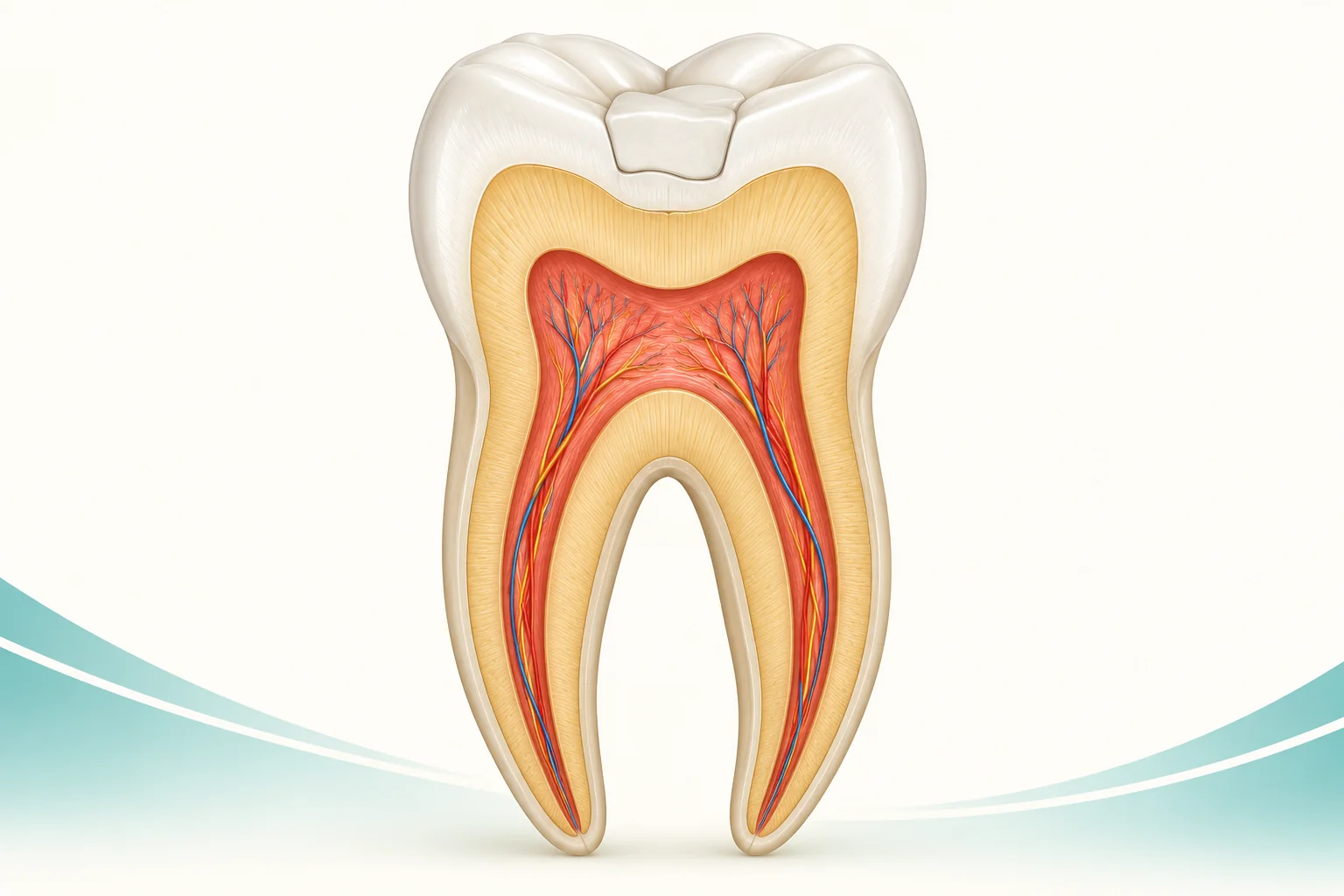
A filling restores a cavity or a small damaged area of a tooth. The dentist prepares the tooth and places a suitable material. However, a badly damaged tooth may need a different restoration or additional treatment.[2]
In particular, a filling does not make a tooth permanently immune to decay. Existing restorations can wear or fail, so they still need care and assessment.[2]
Why might you need a filling?
Early decay can develop without noticeable pain. Later, you may notice sensitivity, toothache or a visible hole. A dentist uses your symptoms, an examination and, when appropriate, X-rays to assess the damage.[9]
For example, bacteria in plaque produce acids from sugars. Repeated acid attacks can damage the tooth surface. Early mineral loss may respond to preventive treatment; an established cavity may need restoration.[9]
However, sensitivity alone does not prove that you need a filling. A worn restoration, crack, exposed root or gum problem can produce similar discomfort.[7]
What happens during the appointment?
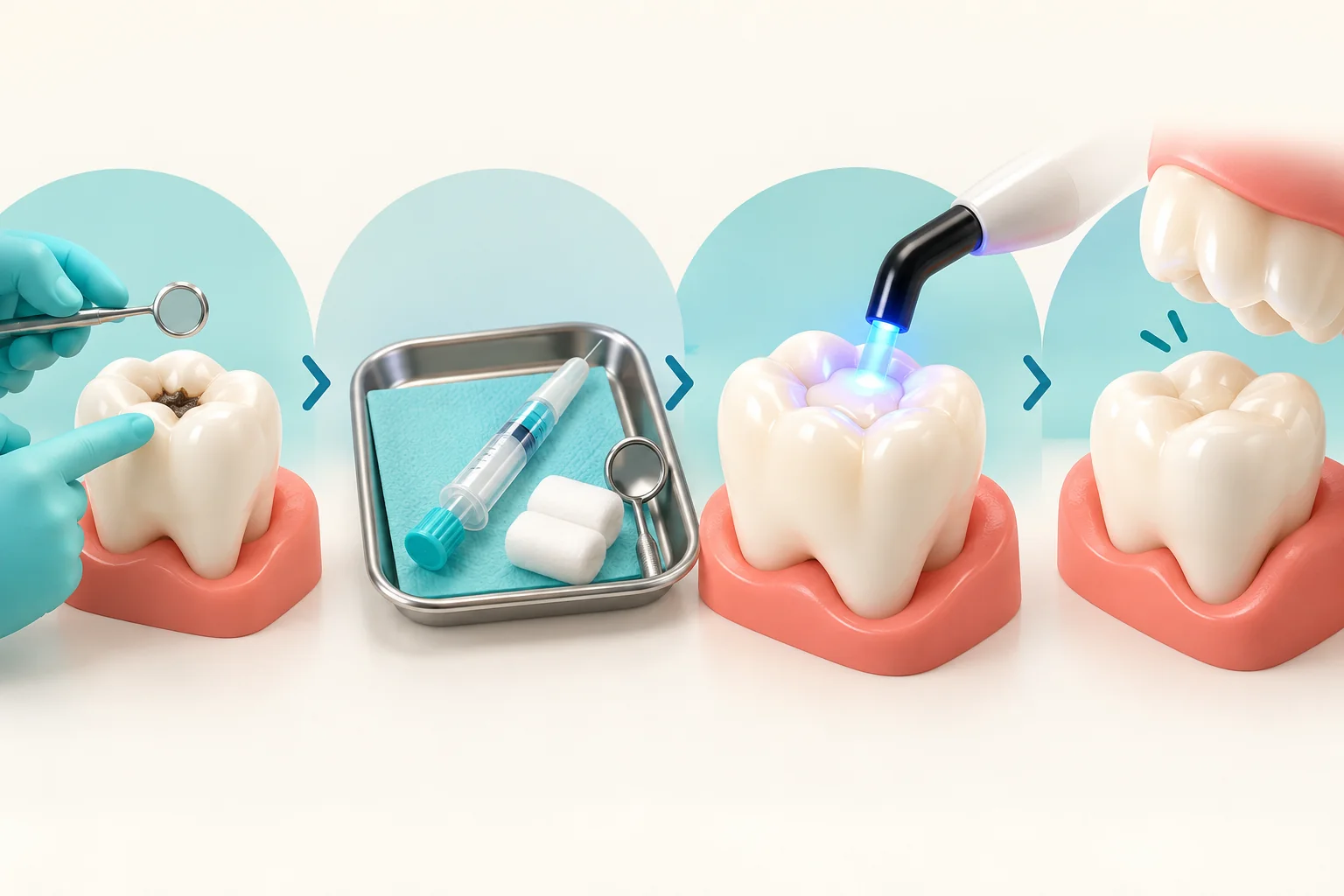
First, the dentist confirms the plan and checks your medical history. Local anaesthetic can numb the area while you remain awake. Tell the team about allergies and previous reactions before treatment.[4]
Next, the dentist prepares the cavity and places the restoration. Composite material uses a curing light. Finally, the dentist shapes the surface and checks how your teeth meet.[3]
If you feel pain, signal the team rather than trying to tolerate it. Before treatment, agree on a simple stop signal, such as raising your hand. This gives you a clear way to ask a question or request a pause.
What changes the appointment length?
The number of teeth, cavity size, location and equipment all affect the estimate.[1] Therefore, ask whether the booking includes assessment and treatment or only the filling procedure.
Also, check whether the dentist plans to complete all treatment that day. A temporary restoration protects a tooth between appointments but does not always finish the treatment.[5]
For a useful booking conversation, ask:
- Which tooth or teeth will you treat?
- Is this a direct filling or a laboratory-made restoration?
- How much time should I keep free, including check-in?
- Will I need sedation, an escort or another appointment?
- Who should I contact if the bite feels different afterwards?
Which filling material will you receive?
Composite resin is tooth-coloured. Glass-ionomer cement has different uses, including some temporary restorations. Laboratory-made options include porcelain and gold.[5] However, the best choice depends on your tooth and circumstances.
In the USA, the FDA encourages suitable non-amalgam alternatives for certain higher-risk groups. These include pregnant or breastfeeding people, young children, and people with some kidney, neurological or allergy-related concerns. However, it does not recommend removing sound amalgam fillings simply to prevent disease.[6]
Discuss this separately from speed. A faster procedure is not automatically the most appropriate material choice.
Eating, numbness and recovery
The appointment can finish before normal sensation returns. Therefore, avoid accidentally biting numb lips or cheeks, and follow your dentist’s eating advice.[3] [4]
Ask for instructions specific to the restoration. A temporary filling, direct composite and laboratory-made restoration are different treatment situations.[3] [5]
Some sensitivity can follow a filling. However, ask the practice about persistent symptoms or pain when biting. A high spot or another tooth problem may need assessment.[3] [5]

Preventing further tooth decay
Use fluoride toothpaste and clean between your teeth regularly. Also, reduce frequent sugary snacks and drinks. Your dentist can advise on your own decay risk and check-up schedule.[9]
For practical routines, explore our oral hygiene guide and dental flossing techniques. If your discomfort is a sore on the mouth lining instead, read about mouth ulcers and when to seek care.
When to contact a dentist urgently
Seek urgent dental care for worsening pain with fever or facial swelling. Breathing or swallowing difficulty needs emergency care.[8]
Also, contact the practice if your filling breaks or your bite feels persistently wrong. Do not reshape the filling yourself.[3]
Advice for readers in different countries
This guide explains the procedure, rather than national insurance entitlement. Readers in the USA, India, Canada, Australia and the UK should ask their own practice about availability, charges and follow-up. Request a written estimate and a local contact number.
The FDA material advice above is explicitly US guidance. Australian readers can consult Healthdirect’s dental filling information. UK readers can read the NHS explanation of local anaesthetic. Neither resource replaces your dentist’s instructions.
Frequently asked questions
How long does a filling take when there are several cavities?
Multiple fillings can take longer than an hour. However, the number and complexity of cavities matter more than a simple multiplication rule. Ask the practice whether it recommends one visit or several.[1]
Does a quick filling mean the dentist missed something?
No conclusion about treatment quality follows from time alone. Instead, ask what treatment was completed and whether any follow-up remains.
Can I work after a filling?
Routine activities are often possible after treatment without sedation. However, check any sedation restrictions and consider remaining numbness when planning your day.[3]
Does every cavity need a filling?
No. Very early decay may need preventive treatment, while deeper damage can require more complex care. A dental assessment determines the appropriate option.[9]
Bottom line
When you ask “how long does a filling take?”, request an estimate for the whole visit. Allow for the tooth, material and number of restorations. Then follow the aftercare plan and contact the practice if symptoms worsen.
References
- BCBS FEP Dental — How Long Does It Take to Get a Filling? (patient information; illustrative timing, not a clinical guideline). Accessed 6 October 2026.
- NIDCR — Dental Fillings. Accessed 6 October 2026.
- Cleveland Clinic — Dental Fillings. Accessed 6 October 2026.
- NHS — Local anaesthetic. Accessed 6 October 2026.
- Healthdirect Australia — Dental fillings. Accessed 6 October 2026.
- FDA — Dental Amalgam Fillings. Accessed 6 October 2026.
- American Dental Association — Sensitive Teeth. Accessed 6 October 2026.
- NHS — Dental abscess. Accessed 6 October 2026.
- NIDCR — Tooth Decay. Accessed 6 October 2026.
About this information
HealthyCura shares health and wellness information for general reading. This article does not replace professional medical advice, diagnosis or treatment.