
Listen to this article
Prefer listening? Hear the full article at your pace.
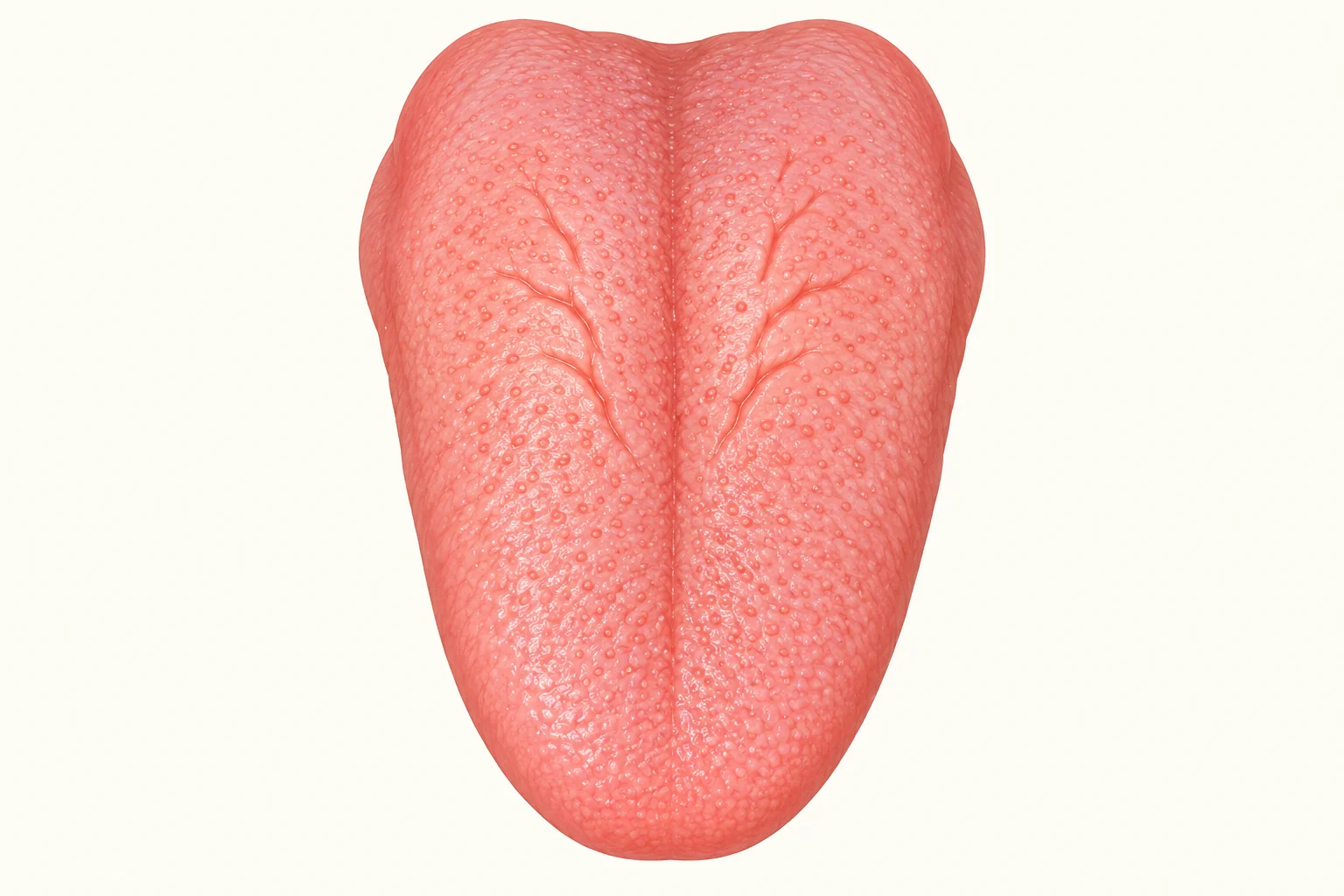
Tongue cracks often describe the grooves of a fissured tongue, a usually harmless variation. However, a new painful split, sore or patch may be a different problem. Therefore, consider both the appearance and symptoms rather than diagnosing from a photograph.[1] [2] [4]
Medical information: This guide explains common patterns. A dentist or doctor should assess persistent pain, new changes or concerns about your tongue.
Key takeaways
- Fissures are grooves on the upper tongue surface.[1]
- They are usually benign and do not need treatment to close them.[3]
- Also, trapped debris can cause irritation or unpleasant breath.[1]
- Grooves alone do not prove a vitamin deficiency or cancer.[3]
- Persistent ulcers, patches, lumps or pain need checking.[6]
What are tongue cracks or fissures?
For example, a fissured tongue can have one prominent central groove or several branching furrows. The grooves vary in depth and shape. For example, a dentist may notice the pattern during a routine examination.[1] [2]
In contrast, a fresh injury or ulcer is not simply another name for a fissure. Also, pain can occur for reasons unrelated to grooves.
Therefore, ask whether the finding is a benign variation or a separate condition. You do not need to make that distinction alone at home.
Why does a fissured tongue develop?
However, the precise cause is not known. Also, an inherited tendency may contribute, and grooves can become more noticeable with age. However, that does not mean every adult will develop them.[2]
Also, some conditions occur more often alongside fissures. Nevertheless, an association does not mean the grooves diagnose one of those conditions.[3]
For example, seeing a groove is not enough to conclude that you lack a nutrient. Instead, a clinician considers the whole history and any other symptoms before deciding whether tests are appropriate.
Tongue cracks and other changes compared
| Pattern or concern | What it may mean | Practical action |
|---|---|---|
| Stable grooves without symptoms | A fissured tongue may be a benign variation.[1] | Ask about routine gentle care. |
| Changing smooth red areas with a pale border | Geographic tongue is a separate pattern that can coexist with fissures.[8] | Have the pattern assessed if unsure. |
| White patches and soreness | Several conditions, including thrush, can cause this.[4] [5] | Do not self-diagnose from colour. |
| Dryness, sticky saliva or trouble eating | Dry mouth needs a cause-based assessment.[7] | Discuss symptoms and medicines. |
| A persistent ulcer, lump or red/white patch | This needs assessment even if fissures are also present.[6] | See a dentist or doctor. |
Importantly, the table lists possibilities rather than a diagnostic checklist. Several patterns can coexist, and a clinician may need to examine the whole mouth.
Can geographic tongue occur with fissures?
Yes. Geographic tongue produces smooth red areas that may have an irregular pale border. Their location and shape can change over time. Fissures may occur alongside that pattern.[8]
Also, geographic tongue can sometimes burn or feel uncomfortable. However, not everyone has symptoms, and treatment depends on the assessment rather than appearance alone.[8]
Therefore, mention whether an area moves, changes size or reacts to foods. These observations can help the clinician understand what you have noticed.
What if the tongue also feels dry?
Persistent dry mouth can make chewing, swallowing or talking difficult. Medicines and several health conditions can affect saliva. Therefore, tell the dentist or doctor about dryness rather than assuming it is simply aging.[7]
Also, bring your medicine list to the visit. A clinician may assess the cause and recommend an appropriate product or other treatment. Do not stop prescribed medicine on your own.
Sipping water may help comfort, but it does not replace an assessment of ongoing dryness. Ask for advice that fits your health needs and any fluid restrictions.[7]

How are tongue fissures diagnosed?
In contrast, a typical fissured tongue usually has a recognisable clinical appearance. A biopsy is generally unnecessary for the usual pattern.[1] [2]
However, that does not mean every tongue change should be treated as harmless. The clinician may investigate an atypical lesion or a separate persistent symptom.
Before the visit, note when you first saw the change and whether pain, bleeding or eating difficulty is present. Also, mention an injury, a new medicine or a change elsewhere in the mouth.
Gentle care for a fissured tongue
Therefore, most fissures do not need a procedure to remove or close them. Instead, the practical aim is to keep the tongue clean and reduce trapped debris.[3]
AAOM advises cleaning the top surface of the tongue. Ask your dental team about a suitable brush or tongue-cleaning device, especially if the surface is sensitive.[1]
However, do not dig into the grooves with sharp tools or scrub until the tissue hurts. Stop a technique that causes pain and ask for guidance.

For a sore tongue, avoiding irritating spicy, acidic or very hot foods may help comfort. Also, seek advice about ongoing pain rather than relying on a home remedy.[4]
Our oral hygiene guide covers the wider daily routine. For cleaning between teeth, see our interdental care guide.
When should tongue cracks be checked?
Arrange assessment if pain persists or worsens, or white patches appear. Also, do not assume that antifungal treatment is needed simply because the tongue looks coated.[4] [5]
The NHS advises checking an ulcer lasting more than three weeks, a lump, persistent mouth pain or red/white patches. These symptoms do not necessarily mean cancer, but they should not be dismissed.[6]
Therefore, do not wait three weeks if a change is rapidly worsening or already concerning. The duration threshold is one reason for review, not permission to delay every symptom.
For difficulty breathing or swallowing with oral swelling, seek emergency care.[9]
Our mouth ulcer guide explains why a sore spot deserves its own assessment. Also, a fissured tongue can coexist with another problem.
Practical questions and country context
In the USA, India, Canada, Australia and UK, start with a dentist or primary-care clinician who can examine the mouth. Referral and costs vary, so ask what the visit and any recommended tests include.
- Is this a typical fissured tongue?
- Does the pain or patch have another cause?
- Which cleaning method is suitable?
- Does persistent dryness need assessment?
- When should I return if the appearance changes?
For background, read AAOM’s fissured-tongue information and NIDCR’s dry-mouth guide.
Frequently asked questions
Are tongue cracks contagious?
A fissured tongue is not contagious. However, a clinician should confirm the diagnosis if you have a new or unusual change.[1]
Do fissures mean cancer?
No. Typical fissures are benign. Nevertheless, a persistent ulcer, lump or patch needs a separate assessment.[3] [6]
Will the grooves disappear?
They generally remain, but there is usually no need to remove them. Focus on comfortable cleaning and any separate symptoms.[3]
Should I take vitamins to treat the cracks?
Grooves alone do not establish a deficiency. Ask a clinician about other symptoms before choosing supplements.[3]
Bottom line
Tongue cracks often reflect a harmless fissured tongue. Keep care gentle and have persistent pain or new changes assessed. Then follow advice based on the actual finding rather than the assumption that every groove needs treatment.
References
- American Academy of Oral Medicine — Fissured Tongue. Accessed 6 October 2026.
- DermNet — Fissured tongue. Accessed 6 October 2026.
- Cleveland Clinic — Fissured Tongue. Accessed 6 October 2026.
- NHS — Sore or white tongue. Accessed 6 October 2026.
- NHS — Oral thrush (mouth thrush). Accessed 6 October 2026.
- NHS — Symptoms of mouth cancer. Accessed 6 October 2026.
- NIDCR — Dry Mouth. Accessed 6 October 2026.
- American Academy of Oral Medicine — Geographic Tongue. Accessed 6 October 2026.
- NHS — Dental abscess: emergency signs. Accessed 6 October 2026.
About this information
HealthyCura shares health and wellness information for general reading. This article does not replace professional medical advice, diagnosis or treatment.